How to Choose All Season Tires for Your Vehicle in 2025
Selecting the right all season tires for your vehicle is a critical decision that can significantly affect your driving experience and safety on the road in 2025. With a diverse range of options available, it's essential to understand the features and benefits that come with different tire types. When it comes to versatility, all season tires, such as the yokohama tires all season line, stand out due to their ability to perform well in various weather conditions. This makes them an ideal choice for drivers who encounter unpredictable climates throughout the year, from wet roads to light snow.
To make an informed decision, consider factors such as tread design, rubber composition, and performance ratings. These elements will not only determine how well the tires handle different conditions but also impact their longevity and fuel efficiency. As automotive technology advances and environmental considerations become more pressing, understanding the latest innovations in tire manufacturing can help you choose all season tires that meet your needs while contributing to a more sustainable driving experience. In this guide, we will explore the essential criteria to consider, focusing on how to make the best choice for your vehicle's performance and safety.

Understanding All Season Tires: What Makes Them Unique
All-season tires are designed to provide a balanced performance across varying weather conditions, making them a popular choice for many drivers. What makes them unique is their construction, which typically combines features of both summer and winter tires. These tires are built with a distinctive tread pattern that offers sufficient traction in light snow while maintaining stability and control in dry and wet conditions. This adaptability allows drivers to handle the unpredictability of changing climates without the need for regular tire changes.
In addition to their versatile tread designs, all-season tires are engineered with specialized rubber compounds that remain flexible in different temperatures. This attribute is crucial, as it helps maintain grip when temperatures fluctuate, ensuring safety and performance whether it's a rainy spring day or a mild winter afternoon. It's important to note that while all-season tires excel in a wide range of conditions, they may not perform as well as dedicated winter tires in severe snow and ice. Therefore, understanding the specific driving needs and climate of your area is essential when considering all-season options for your vehicle.
Evaluating Your Vehicle's Compatibility with All Season Tires
When choosing all-season tires for your vehicle, understanding your vehicle's compatibility is crucial. All-season tires are designed to provide a balance of performance in various weather conditions and maintain a suitable tread life. According to the Tire Industry Association, around 60% of drivers opt for all-season tires due to their versatility and the ability to handle mild winter conditions without the need for seasonal changes. However, not all vehicles are equipped to maximize the benefits of these tires.
To assess compatibility, examine your vehicle’s specifications and requirements outlined in the owner’s manual. Factors such as tire size, load rating, and speed rating are essential when considering a tire’s fit. A report from the Rubber Manufacturers Association indicates that improper tire selection can lead to decreased handling performance and increased wear, which may reduce overall safety and longevity. Furthermore, it’s vital to check your vehicle’s suspension system; certain vehicles may require specialized tires to support higher loads or enhance driving dynamics adequately.
Additionally, understanding your typical driving conditions will play a significant role in the decision-making process. Data from a recent study by the Consumer Reports shows that drivers residing in regions with fluctuating temperatures and occasional rain may benefit from all-season tires over summer tires for improved adaptability. By evaluating these factors, you can ensure that your all-season tires will not only fit your vehicle but also enhance your driving experience throughout the year.
All Season Tires Performance Comparison for Various Vehicles (2025)
Key Features to Look for in 2025 All Season Tires
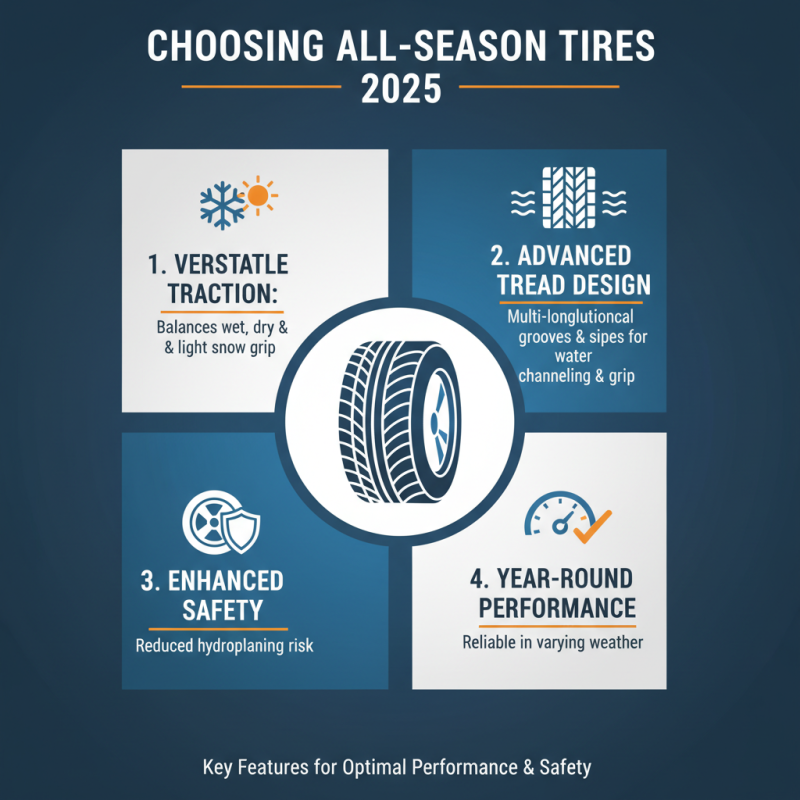
When choosing all-season tires for your vehicle in 2025, it is essential to focus on several key features that enhance performance and safety across varying weather conditions. One of the most crucial aspects to consider is tread design. Modern all-season tires typically feature a versatile tread pattern that balances traction in wet, dry, and light snow conditions. Look for tires with multiple longitudinal grooves and sipes, as these elements improve grip and help channel water away, reducing the risk of hydroplaning.
Another critical factor is the tire's rubber compound. In 2025, advancements in materials technology have led to the development of all-season tires made with more flexible compounds that maintain performance in colder temperatures while providing durability in warmer weather. When selecting tires, check for those that offer enhanced temperature adaptability, which can ensure reliable handling and responsiveness no matter the season. Additionally, pay attention to the tire's treadwear rating, as this will give you an idea of the longevity you can expect, helping you make a wise investment for your vehicle’s needs.
Assessing Terrain and Climate for Optimal Tire Performance
When selecting all-season tires for your vehicle, understanding the terrain and climate you typically encounter is paramount for achieving optimal performance. Different terrains—such as urban roads, highways, and off-road paths—demand specific tread patterns and rubber compounds. For instance, if your routine involves a lot of highway driving, look for tires with a smoother tread design that provides excellent stability and reduced road noise. Conversely, if you often navigate through rugged, unpaved areas, opt for tires with deeper treads and reinforced sidewalls that can withstand the challenges of rough terrain.
Climate also plays a critical role in tire performance. In regions with frequent rain or snow, selecting all-season tires with advanced hydrophobic properties and enhanced grip is crucial to maintain traction in wet conditions. Such tires help channel water away, reducing the risk of hydroplaning. On the other hand, in warmer climates, ensure that the tires are designed to handle higher temperatures without sacrificing responsiveness or longevity. By assessing the specific conditions of both your terrain and climate, you can make an informed choice, ensuring your tires offer safety, comfort, and durability throughout the year.
Comparing Brands: Best All Season Tires of 2025
When choosing all-season tires for your vehicle in 2025, it’s important to consider the specific features that each brand offers. The market is flooded with different options, making comparisons essential. Look for tires that excel in traction, handling, and longevity. Features such as tread pattern, rubber composition, and noise levels can significantly impact your driving experience. To get a clearer picture, check online reviews and ratings to see how each tire performs in various weather conditions.
Tips for selecting the right all-season tires:
1. Assess your driving habits and local climate conditions to find a tire that suits your needs.
2. Prioritize tires that come with a good warranty, indicating manufacturer confidence in their product durability.
3. Conduct side-by-side comparisons of the tires' performance in tests conducted by professional reviewers to understand how they stand against each other.
By focusing on key performance indicators and following these tips, you can make an informed decision that enhances your vehicle's performance throughout the year. Remember to also consider factors like price and availability, as these can vary significantly between brands and models.