How to Choose the Best Truck Tires for Your Fleet?

Choosing the best truck tires for a fleet is not simply a matter of comparing prices. A tire that looks economical in a catalog may wear quickly on rough regional routes, while a durable highway model may not suit frequent stops and tight turns. Small choices matter. Load rating, tread design, casing durability, rolling resistance, and retread potential all affect how a tire performs in daily service. So does maintenance. Incorrect inflation can undermine even a carefully selected tire.

The cost context is significant. The American Transportation Research Institute’s 2024 report, An Analysis of the Operational Costs of Trucking, estimated average U.S. trucking costs at $2.27 per mile in 2023. That figure covers far more than tires, but it shows why small operating differences deserve attention. The U.S. EPA’s SmartWay program recognizes low-rolling-resistance tires as a fuel-saving technology; actual results depend on equipment, routes, and operating conditions. No single tire specification guarantees savings. A fleet’s own mileage, wear, fuel, and downtime records are more useful than a broad product claim.

A practical comparison should start with the fleet’s hardest-working vehicles: note their axle positions, typical loads, road surfaces, seasonal conditions, and replacement intervals. Then compare total cost over the tire’s service life, including inspections, repairs, fuel use, and retreading where appropriate. There is no perfect spec. Fleet averages can also hide differences between routes or drivers, so a small, monitored trial may reveal more than a spreadsheet alone. The right truck tires are the ones that meet the fleet’s needs consistently, not merely the ones with the lowest purchase price.
How to Choose the Best Truck Tires for Your Fleet?

Assess Your Fleet’s Routes, Loads, and Operating Conditions

How to Choose the Best Truck Tires for Your Fleet?
Assess Your Fleet’s Routes, Loads, and Operating Conditions

Start with the roads your trucks actually travel, not just the routes on a dispatch plan. Long highway stretches favor different tread designs than frequent turns through gravel yards or construction access roads. Note steep grades, tight loading areas, standing water, and seasonal temperature changes. A route map can miss the muddy final mile. Ask drivers what they encounter.

Next, match tire specifications to real axle loads and duty cycles. Record typical cargo weights, daily distance, stop frequency, and time spent idling or maneuvering. Check that load capacity and speed ratings suit the vehicle and its work; never choose by appearance alone. Keep an eye on uneven wear, too. It may point to alignment, inflation, or suspension issues, not simply the wrong tire. Conditions vary, so review the choice after a few months of service.

Tips: Compare tire wear and pressure checks by route and vehicle. Keep a simple log. Ask drivers to report cuts, vibration, and repeated traction problems early. Their notes may be imperfect, but they often reveal patterns maintenance records miss.

How to Choose the Best Truck Tires for Your Fleet? — Assess Your Fleet’s Routes, Loads, and Operating Conditions

Use these operating profiles to identify tire characteristics to evaluate. Confirm fitment, load capacity, speed rating, and service requirements against the vehicle manufacturer’s specifications.
Fleet Operating Profile Typical Routes Load and Duty Cycle Operating Conditions Tire Characteristics to Prioritize Inspection and Selection Checks
Long-haul highway Mostly paved highways; long distances between stops Consistent freight loads; extended periods at highway speeds High annual mileage; limited exposure to unpaved surfaces Low rolling resistance, even-wearing tread, and a casing suitable for the fleet’s retread program Compare rolling-resistance information and tread-wear expectations; verify inflation and alignment practices for sustained highway operation.
Regional delivery Highways and secondary roads, with frequent exits and local-road segments Variable loads; repeated starts, stops, and turns Mixed pavement quality; regular maneuvering in depots and customer locations A balance of tread life, traction, and resistance to irregular wear Check tread depth and wear patterns regularly; assess route mix, turning frequency, and vehicle alignment.
Urban distribution City streets, intersections, loading zones, and tight turns Frequent stop-and-go driving; repeated curbside loading Low-speed maneuvering, curbs, debris, and frequent braking Durable construction, dependable wet-road traction, and tread suited to repeated braking and turning Inspect sidewalls for impact damage and check for shoulder wear; review tire pressure and curb-contact patterns.
Construction and job-site service Paved roads combined with gravel, dirt, or work-site access roads Potentially heavy or unevenly distributed loads; frequent low-speed work Loose surfaces, sharp debris, and rough terrain A tread pattern and casing appropriate for the proportion of off-road use, with suitable traction and damage resistance Confirm the tire is approved for the vehicle and intended service; inspect for cuts, punctures, and embedded debris after site work.
Winter and cold-weather routes Highways, regional roads, and local streets during cold seasons Loads may remain similar while braking and traction demands change Cold pavement, rain, snow, or ice, depending on location and season Season-appropriate tread and compounds, with traction capability that matches local conditions and regulations Check applicable winter-tire requirements, tread condition, and pressure in changing temperatures; use approved chains where required and permitted.
Mixed-fleet operation A changing combination of highway, regional, urban, and occasional rough-road routes Different vehicles carry different loads and perform different tasks Operating conditions vary by vehicle, season, and assignment Application-specific tire selection rather than a single specification chosen for every vehicle Group vehicles by axle position and duty cycle; record mileage, fuel use, maintenance, and tire removals to compare results.

Match Tire Types and Tread Designs to Each Truck’s Work

A fleet tire plan should begin with the route, load, and axle—not a single tread chosen for every truck. Ribbed steer tires support predictable tracking and even wear on paved highways. Drive axles need deeper, grippier tread for starts on wet loading docks or gravel access roads. Trailer tires should prioritize stable tracking and resistance to irregular wear. Small details matter.

For regional trucks that turn often, choose durable casings and tread patterns suited to repeated braking and cornering. Vocational trucks working on mud or loose aggregate generally need more open drive-tread voids to clear debris and maintain grip. But aggressive tread can increase rolling resistance and noise on long paved routes. The U.S. EPA SmartWay program reports that verified low-rolling-resistance tires can improve fuel efficiency by 3% or more. That gain depends on proper inflation, alignment, and the truck’s actual duty cycle; tread choice alone will not deliver it.

Compare tire performance by position and route, then track mileage, irregular wear, and fuel use across comparable vehicles. ATRI’s annual Operational Costs of Trucking report helps fleets frame operating costs per mile, making tire trials easier to assess alongside maintenance and fuel. A neat rule is tempting: highway tires for highway trucks. It is imperfect. A truck’s work can change with seasons, detours, and customer sites, so review the fit when its routes change.

Compare Load Ratings, Sizes, and Performance Specifications

A fleet tire should be selected by axle load, not by appearance or price alone. Check the tire’s load index and load-and-inflation table against the heaviest expected wheel-end load. Leave a practical margin for uneven cargo distribution and scale variation. That matters. A steer axle and a drive axle may need different specifications, even on the same truck. Confirm the approved tire size, rim width, and clearance in the vehicle documentation before comparing options.

Then compare tread design, rolling resistance, wet grip, and expected service conditions. The U.S. Department of Energy’s Alternative Fuels Data Center reports that rolling resistance can account for roughly 4–11% of a vehicle’s fuel consumption. The actual benefit of a lower-resistance tire depends on route, load, speed, and inflation; a laboratory figure is not a fleet guarantee. Check pressure when tires are cold, and record readings during routine inspections. A tire that looks fine may still be underinflated. Tread depth, shoulder wear, and casing damage also tell a useful story. Keep records by vehicle and position, then compare mileage and replacement intervals. The spreadsheet may look precise, but inconsistent pressure checks can muddy the result.

Evaluate Total Cost, Durability, and Fleet Compatibility

A truck tire’s purchase price tells only part of its cost. Compare expected mileage, fuel use, repair frequency, and casing value over the tire’s service life. Use your own fleet records when possible; route, load, weather, and driving habits can change the numbers. A low-priced tire may cost more if it wears quickly or causes extra downtime. Still, estimates are imperfect. A season of actual results can challenge a tidy spreadsheet.

Durability depends on matching tire construction and tread to real working conditions. Highway routes, rough yards, frequent stops, and heavy loads create different wear patterns. Review tread depth regularly, check inflation when tires are cool, and record damage by vehicle and route. These details help reveal whether wear is normal or points to alignment, pressure, or operating issues. Fleet compatibility matters too: confirm size, load capacity, and fit with each vehicle’s approved specifications. Standardizing where practical can simplify inventory, but one tire choice may not suit every route.

Tips: Track cost per mile, not just purchase price. Trial a small group first, inspect tires consistently, and compare results after similar routes and seasons. Keep the records honest.

Select a Supplier and Plan Tire Maintenance and Replacement

A dependable tire supplier should understand your routes, loads, and operating conditions—not just quote a price. Ask how quickly they can provide common sizes and whether they offer casing inspections or retreading support. Request clear specifications, delivery estimates, and written warranty terms. Compare the full service, not only the initial cost. A cheap tire can become expensive when availability is poor.

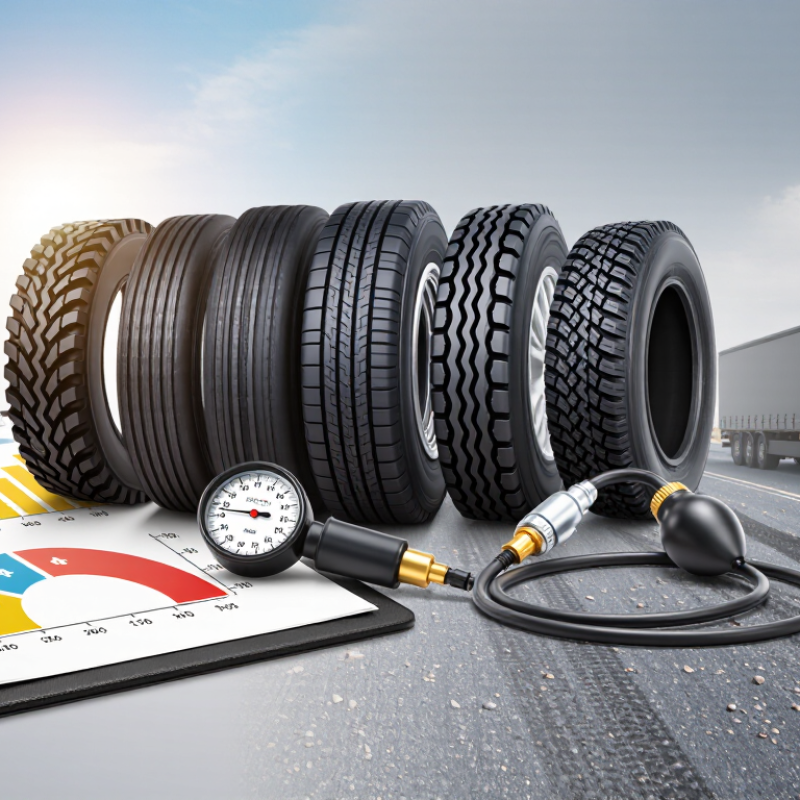
Set a simple inspection routine that drivers can complete before each shift. Check inflation with a reliable gauge, look for cuts or bulges, and note stones lodged between dual tires. Measure tread depth consistently, using the same points across the fleet. Small details matter. Record pressure, mileage, tire position, and inspection findings; those records help reveal recurring problems, such as rapid wear on one axle. Still, a checklist can be rushed on a busy Monday, so supervisors should verify a sample of entries.

Plan replacements around measured tread condition, vehicle use, and the tire maker’s guidance—not a single mileage target. Replace damaged tires promptly, and review alignment or load distribution when wear appears uneven. Keep suitable spare tires accessible, but avoid storing them in direct sunlight or near heat. Review the maintenance schedule after seasonal route changes; a plan that worked in mild weather may need adjustment.

How to Choose the Best Truck Tires for Your Fleet

Use U.S. federal minimum tread-depth requirements as a replacement-planning baseline.

Under U.S. federal rules, trucks must have at least 4/32 inch of tread on front tires and 2/32 inch on other tires. Check applicable regulations and vehicle specifications. When selecting a supplier, compare tire fitment and load ratings, warranty and casing support, service coverage, and tire-tracking options. Inspect tires regularly and schedule replacements before they reach the required minimum.