How to Choose the Best All Terrain Vehicle for Your Adventures?
Choosing the right all terrain vehicle (ATV) can be daunting. With so many options out there, it’s easy to feel overwhelmed. Industry expert Jake Thompson once said, “A great ATV can transform your outdoor experience.” This statement emphasizes the importance of making an informed choice.
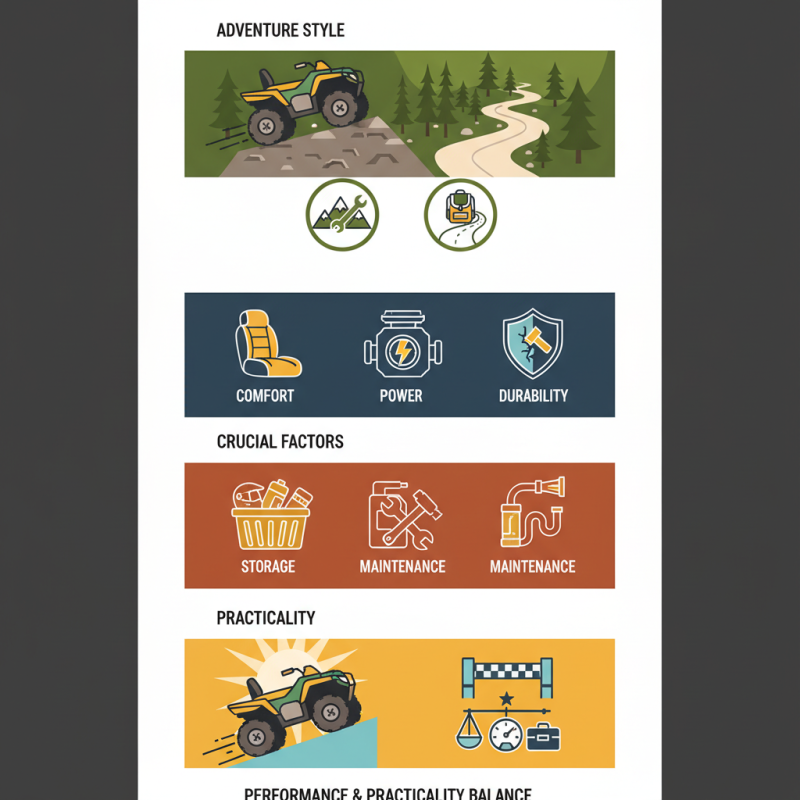
When selecting an all terrain vehicle, consider your adventure style. Do you prefer rugged trails or smooth paths? Each vehicle caters to different needs. Comfort, power, and durability are crucial factors. Many riders overlook these details. Common mistakes can lead to dissatisfaction.
Moreover, think about storage and maintenance. A versatile all terrain vehicle should meet your storage needs. Will it carry your gear comfortably? Reflecting on your choices can save time and money in the long run. Balancing performance and practicality is essential. Ultimately, your ideal ATV should enhance your adventures, not complicate them.
Understanding Different Types of All Terrain Vehicles Available Today
When choosing an all-terrain vehicle (ATV), understanding the various types available is crucial. ATVs can be categorized into several types: utility, sport, recreational, and side-by-sides. Utility ATVs are designed for hauling and working on farms, making them powerful but often heavier. They usually feature larger cargo capacities, which can be beneficial, yet their size can hinder maneuverability in tight spaces.
While sport ATVs focus on speed and agility, they may not provide the stability needed for challenging terrains. A report by the Specialty Equipment Market Association (SEMA) suggests that sport ATVs hold about 30% of the market share, appealing to thrill-seekers. However, riders should be aware of their limitations, especially in rugged conditions.
Recreational ATVs offer a balance but can lack the extreme capabilities of more specialized vehicles. Side-by-sides, with their enclosed cabins, are gaining popularity, especially for family outings. While they offer more comfort, they might feel bulky in narrow trails. Data from the National Off-Highway Vehicle Conservation Council (NOHVCC) indicates a rising trend in side-by-sides usage. However, potential buyers should consider whether their intended use justifies this larger investment. Understanding these nuances helps in making an informed decision for your adventures.
All Terrain Vehicle Types Popularity
Key Features to Consider When Choosing an All Terrain Vehicle
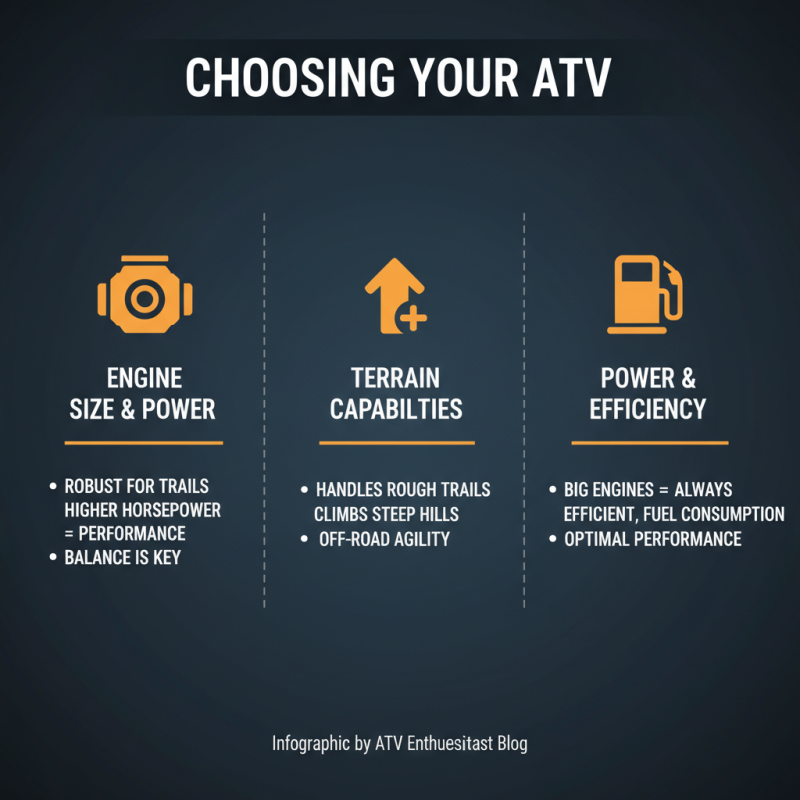
When choosing an all-terrain vehicle (ATV), several key features are crucial. Think about the vehicle's engine size and power. A robust engine is essential for handling rough trails and steep hills. A vehicle with a higher horsepower can offer better performance. However, large engines may not always be efficient. Balancing power and consumption is vital.
Another factor is the suspension system. A good suspension absorbs shocks from uneven surfaces. Look for vehicles with adjustable or high-quality suspension systems. This can significantly influence comfort during your rides. Don't forget about the vehicle's weight. Heavier ATVs might provide stability, yet they can be challenging to maneuver in tight spots.
Lastly, always consider safety features. Roll cages and seat belts are necessary for protection. Some vehicles come with advanced braking systems. These can prevent accidents on slippery terrains. However, some riders overlook these essentials in their excitement. Reflect on what you truly need versus what looks appealing. Making the right choice means balancing features and your riding experience.
Assessing Your Adventure Needs: Terrain, Usage, and Capacity
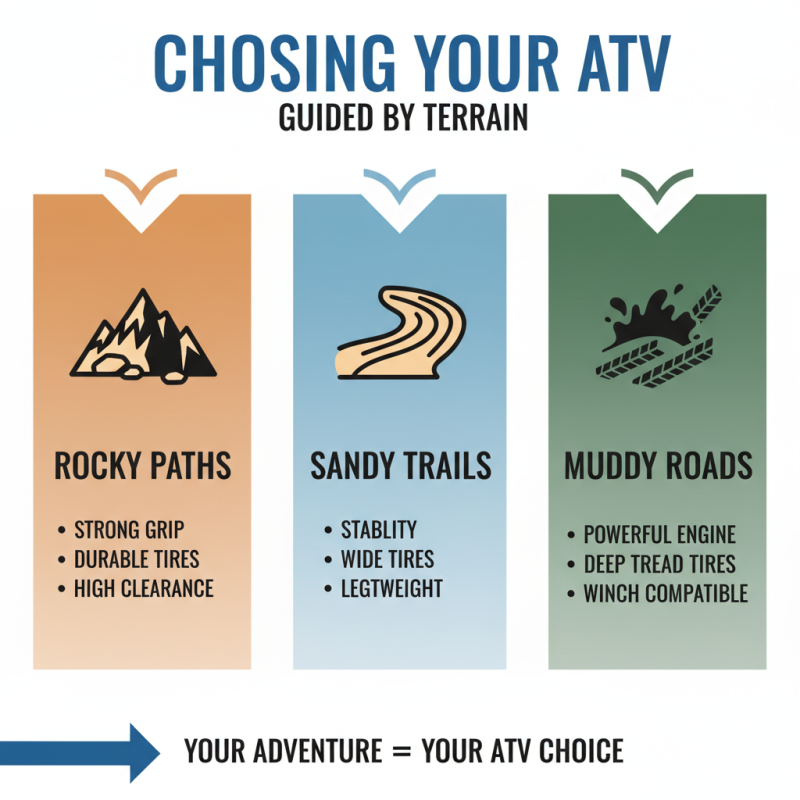
Choosing the right all-terrain vehicle (ATV) can be daunting. Your adventure needs should guide this decision. Consider the type of terrain you will traverse. Rocky paths, sandy trails, or muddy roads? Different terrains demand different capabilities. A strong grip is essential for rocky trails. Stability is key for sandy ones.
Usage plays a major role too. Will you use it for fun, work, or both? For recreational uses, focus on speed and agility. If it’s for work, prioritizing durability and capacity matters. You might want to carry cargo or gear, impacting your choice significantly. Think about how many passengers you'll take along. The more, the merrier, but also heavier.
Capacity isn't just about weight. It’s vital to evaluate your storage needs. Do you need extra fuel or tools? If you pack too much, you risk losing control. Remember, not all vehicles handle the same under pressure. Balance your excitement with caution. Research can be overwhelming, yet it’s necessary. Reflect on your experiences and adjust your choices accordingly. Every adventure offers lessons. Be mindful.
Budgeting for Your All Terrain Vehicle: Costs and Considerations
When budgeting for an all-terrain vehicle (ATV), consider initial costs and ongoing expenses. Research prices in your area. Depending on your needs, ATVs can vary widely in cost. Entry-level models may start at a lower price, but they might lack advanced features.
Don't overlook additional costs. Insurance, maintenance, and fuel all add up. Plan for repairs and parts replacement as well. These expenses can be a surprise. Fuel efficiency is also important—some vehicles consume more gas than others.
Think about your travel plans. Are you exploring remote trails or enjoying family outings? This will influence your choice. Used ATVs can save you money but may come with hidden issues. Inspect thoroughly. Be aware that your ideal vehicle might come with compromising trade-offs.
Maintenance and Safety Tips for Your Chosen All Terrain Vehicle
Maintaining your all-terrain vehicle (ATV) is crucial for safety and performance. Regular maintenance can extend the life of your vehicle and enhance its reliability. According to the Outdoor Recreation Roundtable, nearly 60% of ATV accidents are due to mechanical failures. This emphasizes the need for regular checks.
**Tip:** Check tire pressure often. Properly inflated tires improve handling and fuel efficiency. Inspect the brake systems regularly. Faulty brakes can be dangerous in challenging terrains.
Cleaning your ATV is also important. Mud and debris can accumulate and lead to corrosion. A thorough wash after each ride helps maintain its condition. It’s also beneficial to grease moving parts to prevent rusting. Industry reports suggest that 45% of ATV owners neglect washing their vehicles after use, risking long-term damage.
**Tip:** Store your ATV in a dry place. This can prevent water damage and electrical issues. Regularly checking fluid levels, including oil and coolant, is essential. Many owners overlook this simple yet vital task. It's a mistake that can lead to significant issues down the road.
How to Choose the Best All Terrain Vehicle for Your Adventures? - Maintenance and Safety Tips for Your Chosen All Terrain Vehicle
| Feature |
Description |
Maintenance Tips |
Safety Tips |
| Engine Type |
Two-stroke or four-stroke engines with varying power outputs suitable for different terrains. |
Regular oil changes and filter replacements to ensure optimal performance. |
Always wear helmets and protective gear when riding. |
| Wheel Clearance |
Higher clearance allows for better navigation through rocky or uneven surfaces. |
Check and maintain suspension regularly to avoid wear and tear. |
Avoid steep inclines and deep water crossings without terrain experience. |
| Weight Capacity |
Ensure vehicle can carry rider and any gear without overloading. |
Regularly assess weight distribution and avoid exceeding limits. |
Always inform someone of your riding route and estimated return time. |
| Tire Type |
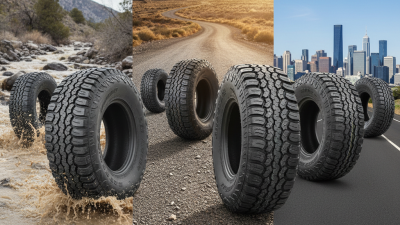
Choose tires that match the terrain—knobby for off-road, smoother for trails. |
Regularly check tire pressure and tread depth. |
Watch for changes in terrain and adjust tire pressure accordingly. |
| Braking System |
Hydraulic or mechanical brakes offer different stopping power. |
Inspect brake pads and fluid levels before riding. |
Practice emergency braking maneuvers in a safe area. |