Balloon decor can look effortless, but a busy order day tells a different story. Staff may inflate dozens of latex balloons while tracking sizes, colors, and delivery deadlines. A well-matched Balloon Blower can reduce repetitive hand work and help keep production moving. The wrong one can create noise, uneven inflation, or a bottleneck at the packing table. Small details matter.
Grand View Research estimated the global balloon market at about $1.4 billion in 2023 and projected continued growth through 2030. Its estimate covers a broad market, not blower sales, so it should not be treated as a forecast for any single business. The U.S. Bureau of Labor Statistics also projected 7% employment growth for event planners from 2023 to 2033, faster than average. That points to a changing event-services landscape, though local demand will vary. Speed is not everything.
Choosing equipment means matching daily volume, balloon types, workspace, and available power. Consider how long the blower can run, whether it supports one or two nozzles, and how easily staff can control inflation. Check noise levels in the actual work area; a specification sheet cannot tell you how loud it feels beside a customer counter. Compare warranty terms and replacement-part access, too. A high advertised output may look impressive, but it can be irrelevant if your team handles small batches. This guide weighs those practical trade-offs and flags a limitation: published market figures rarely reveal what local decorators truly need.
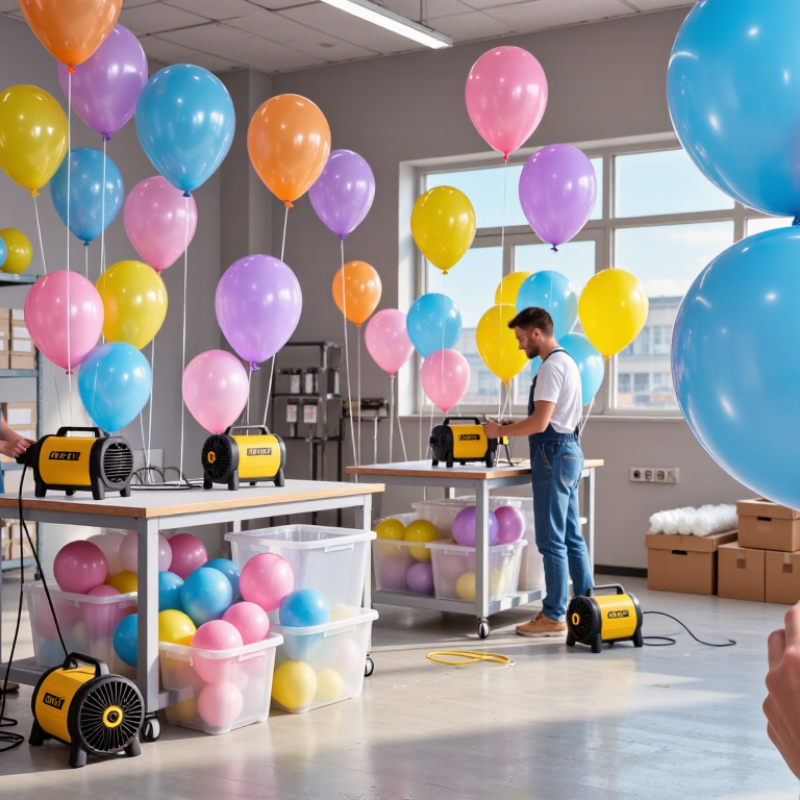
Identify what your team inflates on a normal day and on its busiest day. Count balloons per order, event, and shift. Note sizes, materials, and whether staff need one nozzle or several at once. Latex arches can require hundreds of balloons before guests arrive. Foil designs may need slower, more controlled inflation. A single outlet may be enough for a small studio, but not for a crew preparing several installations.
Use customer demand as context, not as a machine specification. The Knot’s 2024 Real Weddings Study reported an average U.S. wedding spend of $35,000 and an average guest count of 115 for weddings in 2023. Those figures show the scale of one event market; they do not tell you how many balloons each client wants. Track your own orders for a month, including setup deadlines, repeat jobs, and last-minute additions. Estimates still miss.
Then match the workload to practical requirements: continuous run time, inflation speed, portability, noise, and available power. A shop filling bouquets all day may value a durable unit and quick changeovers. A mobile decorator may need a lighter blower that fits beside frames and bins in a van. Ask staff to test shortlisted units with the balloons they actually use. If performance drops during a busy shift, a fast advertised rate will not solve the bottleneck. Keep a small buffer in your capacity plan, but avoid paying for output your business rarely needs.
Balloon blowers generally fall into three groups: hand pumps, compact electric inflators, and high-volume electric models. Hand pumps are inexpensive and easy to carry, but inflating a large order by hand can tire staff and slow setup. They work well for occasional jobs or small, delicate balloons. Slow, but simple.
Compact electric inflators suit shops and event teams that fill balloons regularly. Single-nozzle models offer more control when balloons need careful sizing. Dual-nozzle models can speed up routine work, though both outlets may not be equally useful for every balloon shape. Test the airflow and nozzle fit with your usual stock before buying.
High-volume models are designed for busy days and repeated filling. They can reduce waiting during event preparation, but they may take up more space and produce more noise. Check the duty cycle, cooling requirements, and available outlet attachments; a machine that overheats during a long shift is no bargain. Speed matters, but control does too. A practical choice depends on daily volume, staff experience, storage space, and balloon sizes. My own preference would change with the workload, so compare machines using a realistic batch rather than a quick demonstration.
Choose capacity by your busiest hour, not by the largest figure on a product sheet. Ask how many standard-size balloons the blower can inflate per minute, and under what test conditions. A rating without balloon size or duty cycle can mislead. Try it with the sizes you actually sell; a machine that slows during a long queue may cost more time than it saves.
Controls should suit the workbench. A foot pedal keeps both hands free for holding a balloon neck, while a timer or automatic shutoff helps avoid overinflation. Still, settings need testing. Check that the nozzle fits your common balloon openings and that pressure can be adjusted for different materials. In a small shop, a loud blower can also wear on staff. NIOSH’s occupational-noise criteria set 85 dBA as the recommended limit for an eight-hour workday. Compare noise readings carefully, since measurement distance and conditions may differ. A quiet corner helps.
Check the power supply, plug type, and available outlet before ordering. If several staff members share one unit, inspect the switch and nozzle for easy cleaning and replacement. I would not trust the headline capacity alone. Run a short trial with your usual balloon mix, then note inflation time, heat, noise, and any hand fatigue. Those details are easy to overlook.
A balloon blower should match your busiest days, not just look sturdy on a shelf. For frequent use, check the casing, power switch, cord, and nozzle for solid construction. A loose switch or cracked nozzle can turn a small job into downtime. Ask how replacement parts are sourced and whether routine cleaning is straightforward. Small details matter.
Safety deserves equal attention. Place the blower on a stable, dry surface, keep vents clear, and follow the maker’s instructions for use and cleaning. A unit that overheats, vibrates excessively, or has a damaged cord should be taken out of service. Noise can matter, too, especially in a small shop or at an indoor event. It is easy to focus on purchase price and overlook these daily annoyances.
Operating costs include more than electricity. Consider repair frequency, expected service life, and the time staff spend setting up or clearing jams. A cheaper model may cost more if it slows work during peak hours. There is no perfect estimate; your actual workload may surprise you.
Tips: Compare warranty terms, check the cord length against your workspace, and test the blower with your usual balloon sizes before buying. Keep a simple log of repairs and downtime.
Match the blower to the way balloons move through your workspace. A shop filling a few orders at a time may need a compact unit that is easy to store and quick to set up. Event teams handling several decorations at once benefit from multiple nozzles, clear controls, and a stable base. Count a typical order, then note how many balloons you inflate during your busiest hour. That number is more useful than guessing from the machine’s appearance.
Check the nozzle sizes against the balloons you actually use. A tight fit can make inflation slower, while a loose fit may waste airflow. If staff switch between balloon types, accessible controls and easy nozzle changes can save small amounts of time all day. Small details matter. For mobile work, consider weight, a carrying handle, and access to a suitable power source. For a fixed counter, a longer cord may help keep the work area clear. Compare the stated duty cycle with your real sessions; a blower built for brief use may struggle during long production runs.
Noise deserves a practical check, too. If customers stand nearby, listen to the unit in the room where it will run. Ask staff to test setup, inflation, and cleanup with a typical order before buying. No checklist catches every awkward corner. A test may reveal that a quiet machine inflates too slowly, or that a fast one is tiring to use. Record those trade-offs instead of relying on one impressive specification.
Reignite your passion for driving with Yokohama tires and experience the superior performance you deserve.