Choosing the right Water Supply Tanks can shape a project’s safety, cost, and daily reliability. Global buyers must look beyond price and advertised capacity. A tank may hold 10,000 litres, yet poor placement can reduce pressure, increase pumping costs, or complicate maintenance. Real performance depends on material quality, water compatibility, climate, installation, and local standards.
Peter Gleick, co-founder of the Pacific Institute and a leading water expert, has stated, “Water is a human right, and access to water is a basic human need.” His point gives this comparison a practical foundation. Storage is not merely an industrial purchase. It supports households, farms, hospitals, factories, and emergency reserves. The following guide examines ten respected tank options for global buyers, including polyethylene, steel, concrete, fiberglass, and modular systems. Each option brings different strengths.
Look closely at wall thickness, UV resistance, corrosion protection, fittings, warranties, and inspection access. Ask for material certificates and independent test records. Check whether the design suits potable water, rainwater, fire protection, or industrial use. Local temperature changes matter. So does wind.
Some “best” choices may not fit every market. That is worth admitting. A premium steel tank can be excessive for a small rural site, while a low-cost plastic tank may fail under harsh sunlight. Supplier support is also easy to underestimate. Replacement parts, technical drawings, delivery conditions, and installer training can determine the real value. This overview offers a careful starting point, not a universal verdict.
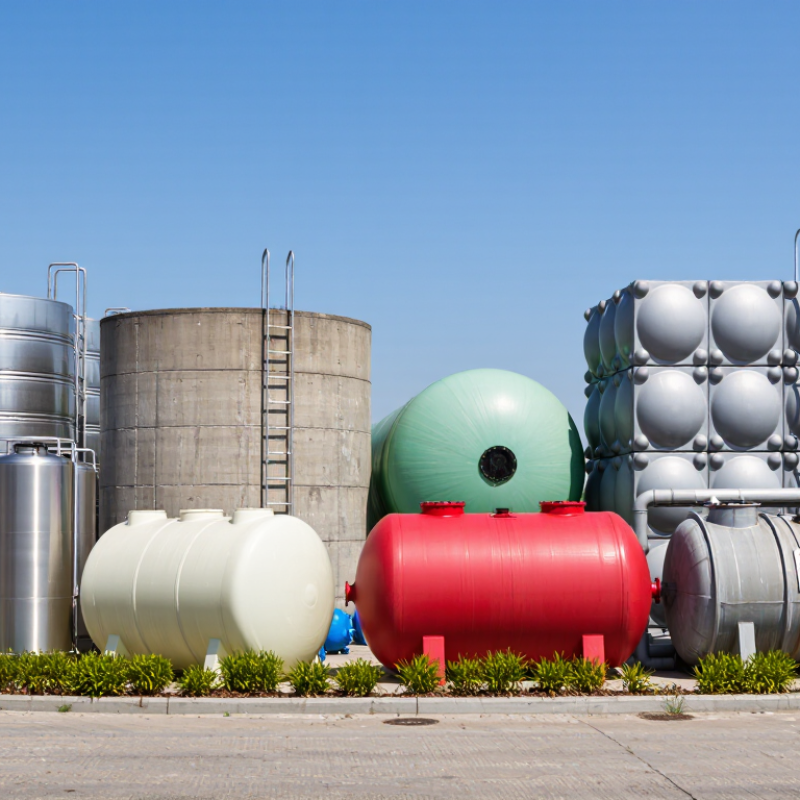
Water supply tanks store treated or raw water, stabilize pressure, and protect distribution during peak demand. The need remains substantial. The WHO/UNICEF Joint Monitoring Programme 2023 reported that 2.2 billion people lacked safely managed drinking water in 2022. For global buyers, the top ten tank choices usually include sectional steel, welded steel, concrete, polyethylene, fiberglass, bladder, elevated, underground, modular, and rainwater tanks.
A sound tank has more than a shell. Its structure includes a foundation, shell or panels, roof, inlet, outlet, overflow, drain, ladder, vents, and inspection access. Materials must match water chemistry, temperature, sunlight, and local installation skills.
AWWA D100 and D103 provide widely used guidance for steel tank design and construction. NSF/ANSI 61 addresses materials that contact drinking water. Details matter.
Applications vary sharply.
Municipal systems need large storage and fire reserves. Hospitals require dependable emergency capacity. Farms often use tanks near remote wells. Buildings need compact tanks for pressure control.
The 2024 UN World Water Development Report links resilient water infrastructure with long-term security, yet resilience is not automatic.
Poor anchoring can overturn a tank. Stagnant water can damage quality. An oversized tank may even increase retention time. Specifications should be reviewed by qualified engineers, and maintenance access should never be treated as an afterthought.
Comparing water supply tanks requires more than checking volume and price. Start with material safety, wall strength, and expected service life. For drinking water, request documented testing for food-contact suitability in the target market. Standards differ between countries, so one certificate may not cover every installation. Check the tank’s capacity against daily demand, emergency storage, and available refill time. A 10,000-liter tank may be excessive for one site but inadequate for a remote facility.
Climate changes the decision. UV-resistant materials suit strong sunlight, while insulated designs help in freezing regions. Wind, seismic movement, roof loads, and uneven ground also need engineering attention. Shape matters. A narrow vertical tank saves floor space, but it may require a stronger foundation. Inspect inlet, outlet, overflow, drain, and vent connections carefully. Small fitting errors can create expensive leaks. They are easy to miss.
Hygiene depends on access and maintenance. Look for a secure inspection opening, smooth internal surfaces, and practical drainage. Field checks often find sediment near poorly positioned outlets. That problem is not dramatic, but it affects water quality over time. Compare cleaning procedures, spare-part availability, delivery protection, and installation support. Ask for drawings, material records, test reports, and a clear warranty. The cheapest quotation may exclude foundation work or transport. I would also question unclear claims about lifetime performance. A reliable comparison leaves room for local expertise, because global specifications are never perfectly universal.
Tank Materials, Designs, Capacities, and Installation Methods
Material selection starts with water quality, climate, and service life. Glass-fused steel resists corrosion and suits large municipal storage. Galvanized steel can reduce initial cost, but damaged coatings need prompt repair. Reinforced concrete offers thermal stability and strong foundations. Polyethylene tanks are lightweight, cleanable, and practical for smaller sites. WHO and UNICEF’s Joint Monitoring Programme reported that 2.2 billion people lacked safely managed drinking water in 2022. Reliable storage remains essential.
Design should match demand, pressure, and maintenance access. Vertical tanks save ground space, while horizontal tanks suit low-clearance locations. Panel tanks can enter narrow sites through standard doors. A useful capacity model includes daily demand, fire reserve, outage duration, and future growth. Oversizing is not always safer; stagnant water can create quality problems. WHO’s Guidelines for Drinking-water Quality recommend controlling storage conditions, sanitation, and recontamination risks.
Installation methods vary by terrain and transport limits. Welded tanks usually require site fabrication, lifting equipment, and strict inspection. Bolted tanks arrive in sections and often reduce access problems. Concrete tanks need verified soil bearing capacity and careful curing. Anchoring matters in seismic or high-wind regions. Field checks should include foundation level, inlet turbulence, overflow routing, drainage, and confined-space procedures. AWWA D100 and D103 provide useful steel-tank design references, but local codes still govern approval. A neat spreadsheet can mislead. Real sites are rarely perfect.
Top 10 Water Supply Tanks for Global Buyers
Global buyers need tanks that match water quality, climate, access, and maintenance skills. The WHO/UNICEF Joint Monitoring Programme reported that 2.2 billion people lacked safely managed drinking water in 2022. Reliable storage remains essential.
The top ten options are polyethylene, sectional fiberglass, bolted steel, welded steel, stainless steel, concrete, underground, bladder, rainwater harvesting, and elevated tanks. Polyethylene tanks suit remote sites because they resist corrosion and install quickly. Fiberglass tanks offer useful strength with moderate weight. Steel tanks support larger volumes, but coatings require regular inspection. Stainless steel performs well in demanding hygiene environments. Concrete works for permanent infrastructure. Bladder tanks save space, although punctures remain a practical concern. Elevated tanks provide pressure without continuous pumping. Simple, but effective.
Buyers should verify potable-water approval, UV resistance, seismic design, inlet size, overflow routing, and spare-part availability. AWWA D103 supports bolted steel tank design, while AWWA D100 covers welded carbon-steel tanks. For drinking water, NSF/ANSI/CAN 61 is a widely recognized health-effects benchmark. Regional requirements still differ.
A 50,000-liter tank may look adequate on paper. Daily demand, fire reserve, and dry-season losses can change that quickly. Site reviews often expose weak foundations and inaccessible valves. Procurement teams should request factory test records, material certificates, and cleaning procedures. Cost estimates are imperfect. Freight, lifting equipment, and local labor can quietly dominate the final budget.
Typical storage capacity ranges by tank type
The chart compares widely used water-supply tank categories by their common nominal storage ranges. Capacity depends on engineering design, site conditions, local regulations, water quality, and project requirements. Flexible bladder tanks are generally used for temporary or modular storage, while concrete, bolted steel, and sectional tanks are commonly selected for larger permanent installations.
Data basis: representative ranges synthesized from commonly specified capacities in municipal, commercial, industrial, agricultural, and emergency water-storage applications. Values are indicative rather than manufacturer-specific.
Selecting among polyethylene, GRP, sectional steel, welded steel, concrete, bladder, collapsible, stainless steel, elevated, and underground tanks requires context. Start with water chemistry, daily demand, climate, foundation capacity, and required autonomy.
The WHO/UNICEF JMP 2023 report found that 2.2 billion people lacked safely managed drinking water in 2022.
That figure makes storage resilience more than a purchasing detail. Ask for certified material data, seam procedures, inlet screens, overflow routing, and drain access. Do not choose capacity from average demand alone. Size for peak use, cleaning downtime, and dry-season uncertainty. An oversized tank can stagnate.
During operation, keep a simple log. Measure level, temperature, turbidity, and disinfectant residual where applicable. Inspect vents and insect screens after storms. Operators should isolate tanks before entry and follow confined-space controls. Sampling should match local drinking-water rules and a risk-based plan.
AWWA D100-21 provides design requirements for welded carbon-steel tanks.
The U.S. EPA’s 2023 seventh Drinking Water Infrastructure Needs Survey estimates $625 billion in drinking-water investment needs through 2043.
Maintenance needs a schedule, not a yearly apology. Wash and disinfect according to water quality and authority requirements. Check corrosion, coating blisters, anchor bolts, ladders, valves, and foundation settlement. Keep inspection photos beside readings.
Field reality is less tidy: a perfect specification can fail when a drain clogs or staff turnover hides alarms.
Review the design after the first wet season. That small reflection often exposes the wrong tank.
Reignite your passion for driving with Yokohama tires and experience the superior performance you deserve.