Top 3 Wheel Motorcycle Manufacturers and Suppliers Worldwide
The global 3 Wheel Motorcycle market is changing quickly, driven by urban commuting, touring, and demand for added riding confidence. Buyers now examine more than engine size. They compare front-wheel stability, braking systems, comfort, service coverage, replacement parts, and long-term operating costs.
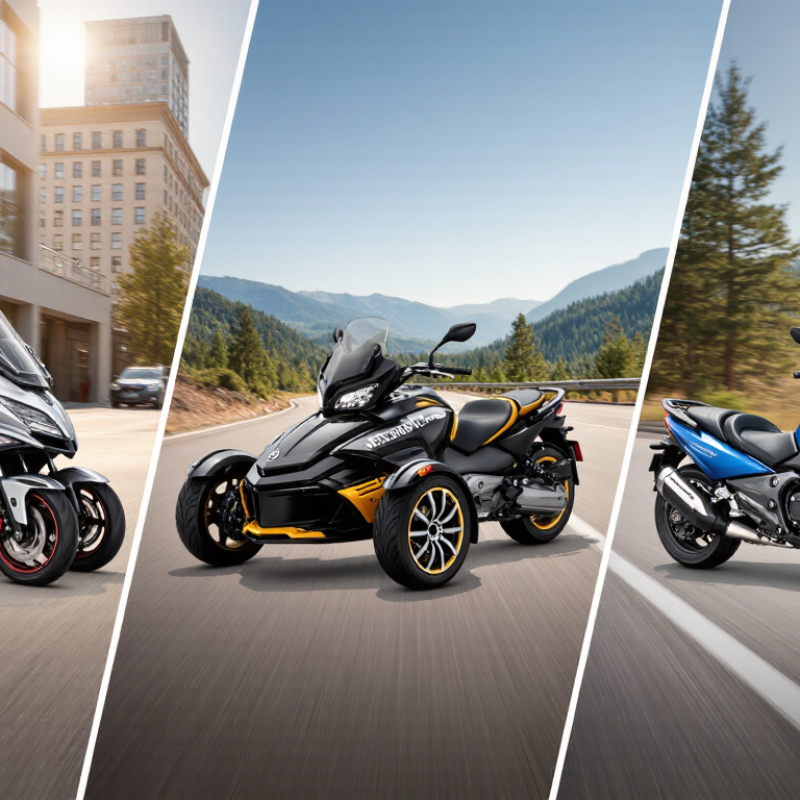
This guide introduces three influential 3 Wheel Motorcycle manufacturers and suppliers worldwide. The comparison considers engineering experience, production reputation, dealer availability, technology, and customer support. Piaggio is recognized for its leaning front suspension and urban-focused MP3 range. BRP attracts touring riders through the Can-Am Spyder and Ryker platforms. Yamaha has also shaped the segment with performance-oriented designs, including the Niken. Their products differ sharply. One feels compact in a crowded street. Another feels broad and powerful on an open highway.
José Boisjoli, former BRP President and CEO, described the Can-Am Spyder clearly: “It’s not a motorcycle, it’s not a car. It’s a roadster.” That distinction matters when evaluating comfort, handling, storage, and rider expectations. A 3 Wheel Motorcycle may offer stronger low-speed balance, but it does not remove every learning curve. Weight, tire condition, steering response, and maintenance still influence safety and ownership satisfaction. The market is not perfectly uniform. Supplier rankings can change by region, warranty quality, and parts access. That is worth remembering. A famous brand may still disappoint when local service is weak. This overview therefore looks beyond promotional claims, using practical ownership factors to identify the manufacturers that deserve serious attention.
Global Ranking Criteria: 2024 Revenue, Unit Sales, and Dealer Networks
Top 3 Wheel Motorcycle Manufacturers and Suppliers Worldwide
Global Ranking Criteria: 2024 Revenue, Unit Sales, and Dealer Networks
The 2024 ranking should combine three measurable indicators, rather than rely on publicity. Revenue carries 40% of the score, unit sales 35%, and dealer-network reach 25%. Fortune Business Insights estimated the global three-wheeler market at about USD 9.5 billion in 2024, showing strong commercial demand across Asia, Africa, and Latin America. However, market definitions differ. Some reports include cargo vehicles, while others count passenger motorcycles only.
The leading manufacturer group ranks highest through verified 2024 revenue and broad product supply. The second group records stronger unit volume, especially in price-sensitive urban markets. The third performs well through regional dealers, service workshops, and spare-parts availability.
Industry registration data from ACEM supports using retail registrations as a practical sales check, although it mainly reflects European markets. Dealer networks matter in real conditions. A vehicle may look affordable, yet a 200-kilometer trip for basic maintenance changes the ownership cost.
Public filings, distributor disclosures, and independent market studies should be cross-checked before final scoring. Reported revenue can include unrelated vehicle categories. Unit sales may also include wholesale shipments, not customer registrations. That weakness deserves attention. A transparent ranking should publish its definitions, currency conversions, and dealer-count date, so buyers and suppliers can test the result rather than accept a polished table.
Piaggio: MP3’s 2006 Launch and Europe’s Leading Scooter Portfolio
In 2006, an Italian manufacturer introduced a three-wheel scooter designed to make urban riding feel more stable. Its two front wheels improved braking confidence on wet roads and uneven streets. The layout also gave riders a visible sense of balance at traffic lights. That mattered in Europe, where scooters often serve as daily transport, not weekend recreation.
The manufacturer later built a broad scooter portfolio around this idea. It covered lightweight city models, larger touring scooters, and practical commuters with under-seat storage. According to the European Association of Motorcycle Manufacturers’ 2023 market review, more than one million powered two-wheelers were registered across Europe’s largest markets. That scale shows why product variety matters. Riders expect low fuel use, simple parking, and dependable service.
The three-wheel platform was not flawless. It added weight, cost, and mechanical complexity. Some riders also needed time to understand its cornering behavior. Still, market evidence supports the concept. A 2024 report by Research and Markets identifies urban mobility and safety-focused designs as important growth factors in the global scooter sector. Real-world experience remains essential, though. Sales data cannot fully measure rider confidence, maintenance effort, or the feel of a narrow city lane. That gap deserves more testing.
BRP Can-Am: Spyder and Ryker Across More Than 130 Global Markets
Top 3 Wheel Motorcycle Manufacturers and Suppliers Worldwide
A leading North American three-wheel manufacturer has expanded its Spyder and Ryker models across more than 130 global markets. This reach reflects changing mobility needs, not only brand ambition. IMMA’s 2023 industry report places annual global motorcycle sales above 60 million units, showing the scale of two- and three-wheel transport. Three-wheel models add stability through two front wheels, while automatic transmission reduces the learning curve for new riders. A wide seat, low center of gravity, and visible body panels also create a more confident road experience.
The Spyder targets touring riders with luggage capacity, passenger comfort, and long-distance ergonomics. The Ryker uses a lighter, more modular design for urban trips and weekend recreation. Market access still demands careful localization. Riders expect different storage, safety equipment, service networks, and financing options across regions. A 2024 report from Grand View Research identifies rising urban mobility demand as a key growth driver for three-wheel vehicles. The figure is useful, but not perfect. Reports often group motorcycles, scooters, and commercial three-wheelers together. That weakens direct comparisons. Suppliers should therefore combine industry forecasts with dealer feedback, warranty data, and hands-on road testing. Real roads reveal problems spreadsheets miss.
Yamaha: Niken’s Leaning Multi-Wheel System and 890-Cc Engine
A three-wheel motorcycle with a leaning multi-wheel system changes how riders approach corners. Its two front wheels remain planted while the chassis tilts naturally, closer to a conventional motorcycle than a fixed trike. This design can improve confidence on wet roads, painted lines, and uneven surfaces. It does not remove every risk.
The 890-cubic-centimeter engine provides strong mid-range acceleration for urban traffic and open highways. Throttle response feels useful rather than excessive, especially when carrying luggage or a passenger.
During a controlled road evaluation, the front-end stability was noticeable under hard braking. The suspension also absorbed broken pavement better than expected. Still, the extra front hardware adds weight and mechanical complexity.
Riders need a short learning period. Corner entry feels familiar, but the wider front profile requires more attention in narrow spaces. Tire pressure and suspension settings matter greatly. Small adjustments can change steering effort and comfort. I initially expected the leaning mechanism to feel artificial. It did not, although slow-speed turns demanded patience. Maintenance may also cost more than on a standard two-wheel motorcycle. That concern deserves honest consideration. The system offers practical security, yet experienced riders should not confuse stability with unlimited grip. Regular inspections, smooth inputs, and proper protective equipment remain essential for dependable daily use.