Top Rated SUV Tires for Your Vehicle Needs in 2026?
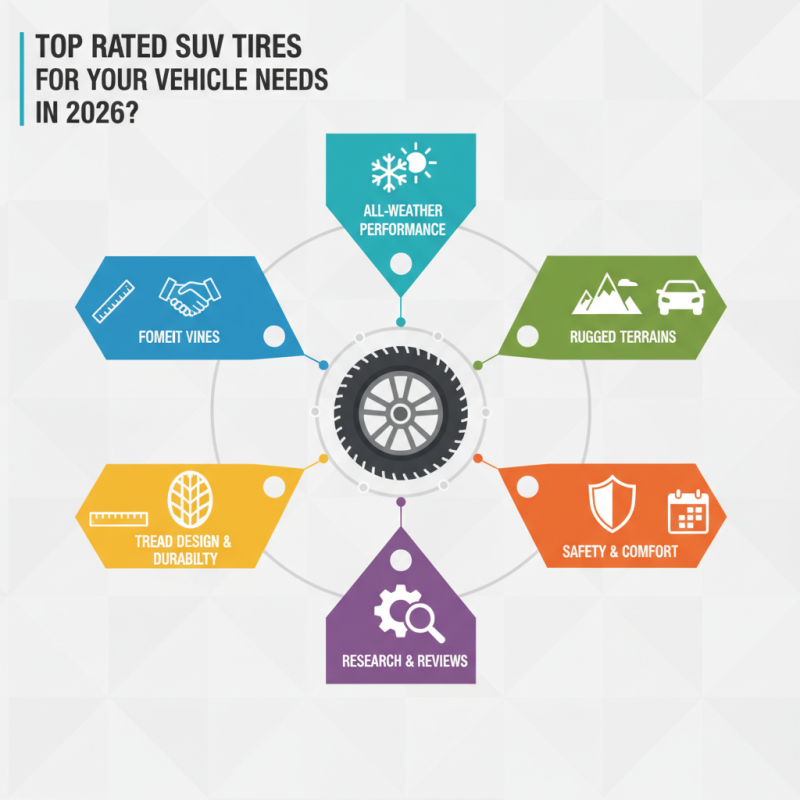
As we approach 2026, the right choice of SUV tires becomes more critical than ever. With numerous brands and models available, making the best decision can be daunting for vehicle owners. Quality SUV tires enhance performance, safety, and comfort on various terrains.
In today's market, some tires excel in all-weather performance, while others focus on rugged terrains. Recognizing these differences is essential. Reliable reviews and expert insights can guide you through this sea of options. This landscape of choices often leads to confusion, and an informed decision is a must for your driving experience.
Popularity is not always a guarantee of quality. Sometimes, well-known brands may not meet your specific needs. Evaluating aspects like tread design, durability, and warranty can lead to a more satisfying choice in SUV tires. Take time to research and consider personal driving habits to find what truly fits you.
Top Features to Consider When Choosing SUV Tires in 2026
When selecting SUV tires in 2026, the right features can make a significant difference. First, consider the tread design. All-terrain tires often provide a blend of grip and comfort. Look for patterns designed for wet and dry conditions. Enhanced traction can improve handling and safety.
Another key feature is tire durability. Puncture resistance is essential for off-road adventures. A rugged sidewall can protect against cuts and abrasions. However, some users find that tougher tires may generate more road noise. Balance durability with comfort for the best experience.
Tips for choosing SUV tires include checking tread wear ratings. A higher rating often indicates longer-lasting performance. Additionally, evaluate noise levels during your test drive. Many people overlook this aspect. Quiet tires can transform a long journey into a pleasant experience. Always review user feedback. Real-world experiences can reveal valuable insights.
Popular Tire Brands for SUVs: A Comprehensive Review
When selecting tires for SUVs, understanding the market can be overwhelming. A detailed analysis of various tire brands reveals notable differences in performance and durability. According to industry reports, tire longevity can vary significantly, with some tires lasting up to 70,000 miles while others may only reach 40,000 miles. This data is crucial for consumers looking to maximize their investment.
Popular tire brands generally emphasize all-terrain capabilities, with many tires showcasing advanced tread designs. These designs enhance traction on various surfaces, improving safety and handling. However, not all tires perform equally well in extreme conditions. For example, some may excel in wet or snowy conditions, while others may struggle. This inconsistency can lead to safety concerns, especially for off-road enthusiasts.
Moreover, consumer reviews often highlight the importance of noise levels and ride comfort. Many drivers prefer a quieter ride, which is not always prioritized in tire manufacturing. Data from user surveys indicate that approximately 25% of SUV drivers experience noise issues with their tires. It's essential to balance performance, comfort, and durability when making a choice. Conducting thorough research before purchasing can alleviate long-term regrets and ensure the best fit for your driving style.
All-Terrain vs. Highway Tires: Which is Right for Your SUV?
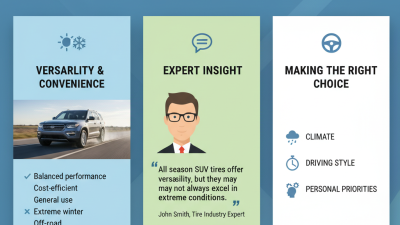
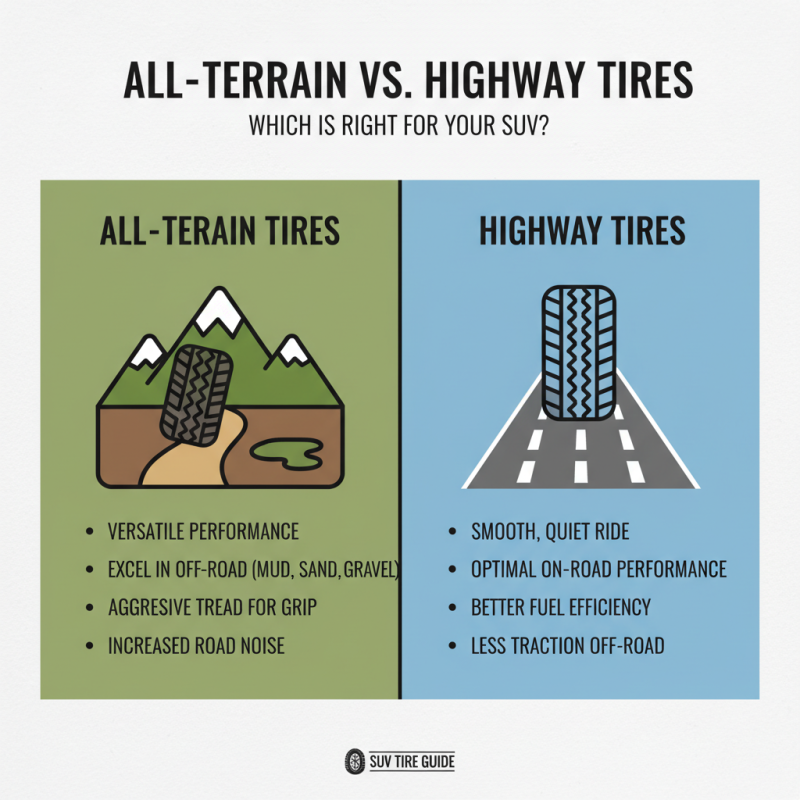
When choosing the right tires for your SUV, the decision between all-terrain and highway tires is crucial. All-terrain tires are designed to perform on various surfaces. They excel in off-road conditions like mud, sand, and gravel. According to industry reports, these tires offer a tread pattern that grips effectively in rough terrains. However, they can produce increased road noise compared to highway tires.
Highway tires, on the other hand, are engineered for optimal performance on paved surfaces. They provide a smoother ride and are typically quieter. National Highway Traffic Safety Administration data shows that highway tires improve fuel efficiency by up to 15% compared to their all-terrain counterparts. This can be a significant factor for urban drivers.
While all-terrain tires boast versatility, they may wear out faster on highways. Conversely, highway tires may not hold up as well in off-road situations. The choice can reflect your driving habits. If daily commutes dominate your schedule, highway tires could be more beneficial. For weekend adventurers, all-terrain tires might suit better. Ultimately, weighing your specific needs can lead to a more informed decision.
Understanding Tire Ratings and Reviews for 2026 SUV Models
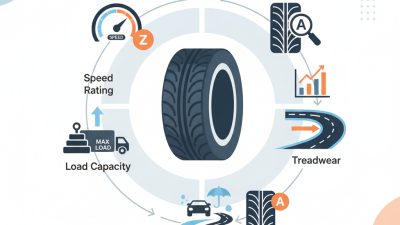
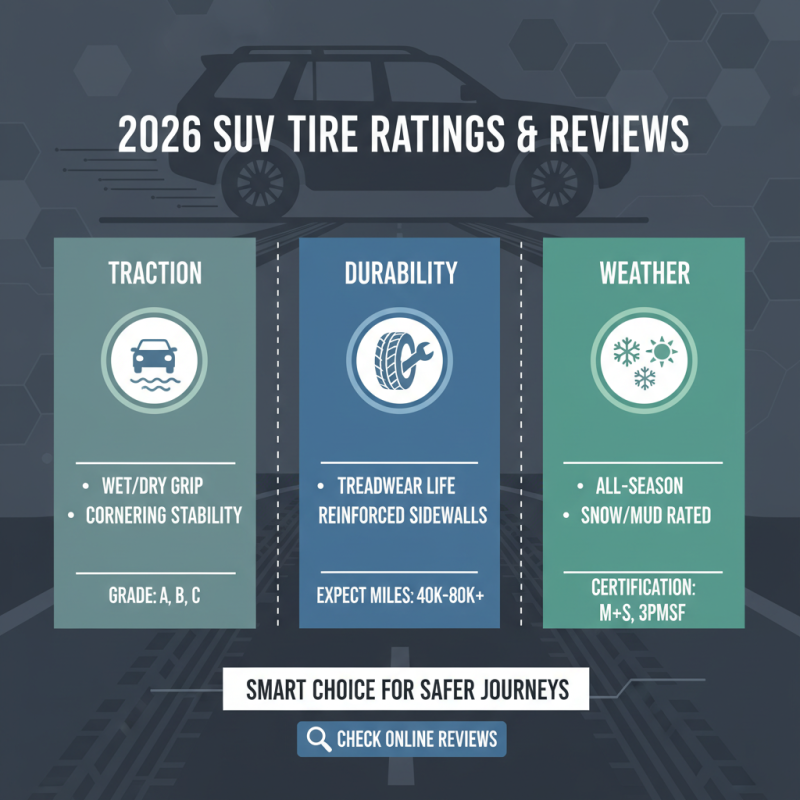
When selecting tires for your SUV in 2026, understanding tire ratings is crucial. Tire ratings indicate how well a tire performs in various areas, such as traction, durability, and weather conditions. Look for labels that show the tire's performance in wet or dry environments. These ratings help you assess how a tire may perform across different terrains.
User reviews play a significant role in evaluating tires. Many drivers share their experiences online. They highlight factors, like comfort and handling, that official ratings might not cover. Real-life feedback from other SUV owners can reveal potential issues or benefits. Sometimes, experiences can be mixed. One driver might rave about a tire's grip in snow, while another comments on wear and tear.
Reading these reviews helps build a well-rounded view. Remember to consider your driving style and environment. You may need different features if you often drive in the city versus off-road. Evaluating both ratings and real user feedback can guide you toward making a well-informed choice.
Maintaining Your SUV Tires: Tips for Longevity and Performance
Maintaining your SUV tires is crucial for safety and efficiency. Regular inspections can prevent unexpected issues. Look for signs of wear, such as cracks or uneven tread. Keeping tires properly inflated is essential for performance and fuel economy. Under-inflated tires can decrease handling and increase wear. In contrast, over-inflation can make your ride uncomfortable.
Rotation is another vital practice. Changing the positions of your tires every 5,000 to 7,500 miles helps to ensure even wear. This simple task can extend tire lifespan significantly. Alignment checks should also be part of your routine. Misalignment can lead to rapid wear and affect vehicle handling.
Cleaning your tires regularly keeps them free from debris and helps prevent damage. A simple wash with mild soap and water can be effective. Pay attention to tire walls as well; they can accumulate dirt and grime. Lastly, watch for aging. Even if the tread looks good, tires can degrade over time. This requires careful monitoring and, when needed, timely replacements.
Top Rated SUV Tires for Your Vehicle Needs in 2026
| Tire Model |
Performance Rating |
Tread Life (miles) |
Traction Rating |
Season |
| All-Terrain Legend |
9.5/10 |
60,000 |
A |
All-Season |
| Mud & Snow Warrior |
9.7/10 |
55,000 |
A+ |
Winter |
| Eco-Friendly Cruiser |
9.0/10 |
70,000 |
B |
All-Season |
| Highway Dynamo |
9.5/10 |
65,000 |
A+ |
Summer |
| Urban Performer |
9.3/10 |
50,000 |
A |
All-Season |