Choosing the right machine for balancing tires is a practical decision, not a simple equipment purchase. Global buyers must compare accuracy, operating speed, software, power compatibility, service support, and long-term maintenance. A workshop in Germany may need different features from a mobile service center in Brazil. Voltage matters. So does training.
Wheel-service expert Paul Haney offers a useful reminder: “A balanced wheel is not merely smoother; it protects the entire connection between tire and road.” This principle explains why professional buyers should examine measurement repeatability, shaft quality, automatic data entry, and vibration control. A low price can look attractive. It may hide expensive downtime.
The machines selected for this guide represent different workshop needs and budgets. Some prioritize heavy-duty truck wheels. Others suit passenger cars, dealerships, or compact garages. We consider clamp systems, display clarity, calibration routines, noise levels, and technical support. Real operating conditions matter more than impressive brochures.
There is no perfect model. Even an advanced balancer can produce poor results when the rim is dirty, the cone is mismatched, or the operator skips calibration. That detail is easy to overlook. Buyers should also confirm local spare-part access and warranty coverage before ordering internationally. Our comparison aims to provide reliable direction, while recognizing one limitation: equipment performance can change with installation quality, operator experience, and regional service conditions.
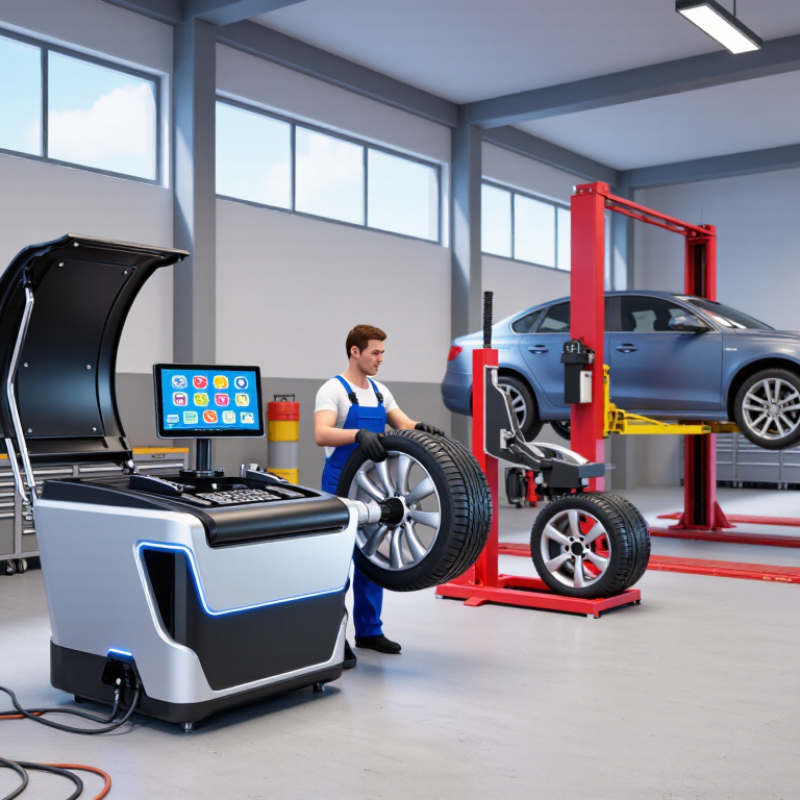
Tire balancing machines differ by wheel size, accuracy needs, and working environment.
For small garages, static bubble balancers offer a simple option for passenger-car wheels. They need little training and can work where electricity is limited. Their readings depend heavily on level installation and careful operator judgment.
It is basic. Not always enough.
Computerized dynamic balancers measure imbalance across inner and outer planes. They suit busy service centers handling alloy wheels, different rim widths, and frequent customer vehicles.
A laser or digital display can speed weight placement, but calibration remains essential.
Dust, vibration, or an uneven floor can distort results.
Heavy-duty truck balancers use stronger shafts, wider cones, and higher load capacity. They support commercial fleets, agricultural vehicles, and regional transport workshops.
Technicians should check spindle diameter, maximum wheel weight, and adapter compatibility before purchase.
A passenger-car model may physically spin a larger wheel, yet its accuracy can become unreliable.
That mistake costs time.
Portable balancing machines serve roadside teams and mobile repair units. They are valuable in remote markets, but limited power, weather, and transport damage require extra inspection.
A protective case and stable setup matter more than flashy controls.
Motorcycle wheel balancers use narrow shafts and specialized adapters for smaller rims. They help two-wheel service shops avoid bearing damage and uneven mounting.
For mixed workshops, combination systems can reduce equipment costs, though changing adapters slows production.
Global buyers should compare local voltage, service support, spare parts, calibration procedures, and operator training.
Certification claims deserve verification.
I would also test a sample wheel before approving a large order. The first result can look convincing and still be wrong.
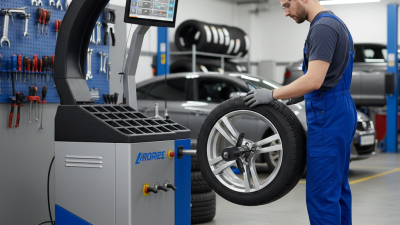
Choosing among the 10 best tire balancing machines requires more than comparing prices. Experienced technicians examine accuracy, repeatability, and daily operating comfort. A reliable machine should detect imbalance quickly and display clear readings. Automatic data entry can reduce mistakes when measuring tire width and diameter. However, automation is not always perfect.
Check the maximum wheel diameter, tire width range, and load capacity before ordering. The machine must support the wheel types used in your market. Look for a strong shaft, stable cones, and a guarded spinning area. A calibration function matters because dust, vibration, and long-term use can affect results. Noise level also deserves attention in busy workshops. Voltage compatibility and replacement-part access are practical concerns for global buyers.
Tips: Ask for a calibration certificate and operating video. Confirm manual language, training support, warranty terms, and delivery conditions. Test the machine with several wheel sizes when possible. A low price may hide expensive service delays. Do not trust impressive screen graphics alone. Compare measured results with a known reference wheel, then inspect the machine after repeated use.
Comparison based on commonly specified performance ranges for passenger-car, motorcycle, commercial-vehicle, and mobile tire-service applications.
| No. | Machine Type | Recommended Application | Rim Diameter Range | Maximum Wheel Diameter | Maximum Wheel Width | Maximum Wheel Weight | Balancing Accuracy | Typical Cycle Time | Power Supply | Key Features to Compare |
|---|---|---|---|---|---|---|---|---|---|---|
| 1 | Standard Digital Wheel Balancer | General passenger-car workshops | 10–24 in | 1,000 mm | 15 in | 65 kg | ±1 g | 7–10 seconds | 220 V, single-phase | Automatic distance and diameter entry, standard alloy programs, LED or digital display, compact cabinet. |
| 2 | Automatic Passenger-Car Balancer | High-volume tire and service centers | 10–26 in | 1,050 mm | 20 in | 75 kg | ±1 g | 6–8 seconds | 220 V, single-phase | Automatic start, laser or pointer positioning, hidden-weight mode, split-weight function, and multiple alloy-wheel programs. |
| 3 | Commercial-Vehicle Wheel Balancer | Trucks, buses, vans, and fleet workshops | 10–30 in | 1,200 mm | 20 in | 200 kg | ±10 g | 15–25 seconds | 220/380 V | Heavy-duty shaft, reinforced cabinet, truck and light-truck programs, extended shaft length, and high-load wheel support. |
| 4 | Premium Automatic Balancer | Professional workshops requiring repeatable results | 10–26 in | 1,120 mm | 20 in | 75 kg | ±1 g | 5–7 seconds | 220 V, single-phase | Automatic data arm, electronic brake, self-diagnostic functions, programmable weight optimization, and memory for frequently used rims. |
| 5 | Motorcycle and Small-Wheel Balancer | Motorcycle, scooter, and small-wheel service | 6–24 in | 800 mm | 12 in | 40 kg | ±1 g | 8–12 seconds | 110/220 V | Motorcycle adapters, narrow-wheel support, low-speed operation, compact footprint, and selectable adhesive or clip-on weights. |
| 6 | Space-Saving Wall-Side Balancer | Small workshops and urban service bays | 10–24 in | 1,000 mm | 17 in | 60 kg | ±1 g | 8–12 seconds | 220 V, single-phase | Reduced floor area, folding or integrated hood, manual or semi-automatic data entry, and easy access for routine maintenance. |
| 7 | High-Speed Alloy-Wheel Balancer | Performance-car and alloy-wheel specialists | 10–28 in | 1,100 mm | 20 in | 70 kg | ±1 g | 5–8 seconds | 220 V, single-phase | Precision collets, wide-cone compatibility, adhesive-weight programs, automatic rim measurement, and vibration-controlled drive operation. |
| 8 | Portable Service-Truck Balancer | Mobile tire-service operations and roadside work | 10–24 in | 1,000 mm | 17 in | 60 kg | ±2 g | 10–15 seconds | 110/220 V or 12 V option | Compact construction, transport locks, low power demand, ruggedized controls, optional vehicle power conversion, and quick setup. |
| 9 | Heavy-Duty Truck and Agricultural Balancer | Agricultural, off-road, bus, and truck applications | 10–38 in | 1,400 mm | 25 in | 250 kg | ±10 g | 20–35 seconds | 380 V, three-phase | Extra-large shaft, reinforced spindle, high-capacity lift or wheel support, off-road rim programs, and durable industrial controls. |
| 10 | Entry-Level Manual-Input Balancer | Budget-conscious workshops and low-volume use | 10–24 in | 960 mm | 15 in | 55 kg | ±5 g | 10–15 seconds | 220 V, single-phase | Manual parameter entry, basic static and dynamic modes, simple digital display, low initial cost, and straightforward operator training. |
Note: Specifications vary by configuration, shaft, adapters, regional electrical standards, and manufacturer calibration. Buyers should verify the final technical datasheet, wheel-size compatibility, included accessories, warranty coverage, and local service support before purchase.
10 Best Tire Balancing Machines for Global Buyers?
Choosing among the top ten tire balancing machines depends on wheel size, workshop volume, and operator experience. A computerized dynamic balancer measures imbalance on both wheel planes. Its main advantage is accurate correction for passenger vehicles. A digital wheel balancer offers clear readings and simple controls. It suits small garages with regular service demand. Laser-guided balancers improve weight placement. The beam shows the correction point on the rim. Automatic clamping systems reduce setup errors and save working time.
A heavy-duty truck balancer handles larger wheels and stronger shafts. It is valuable for commercial fleets and transport workshops. A motorcycle balancer uses narrower adapters and gentler rotation. Its advantage is safer handling for lightweight rims. Portable balancing machines support mobile service teams. They need careful leveling, though. Pneumatic clamping models provide consistent wheel positioning during repeated jobs. Road-force balancers identify vibration caused by tire and rim interaction. This deeper diagnosis can reduce repeat complaints. Static balancers remain affordable and practical for basic single-plane correction.
Entry-level electronic balancers are easy to learn and maintain. They can be useful where budgets are limited. In my workshop experience, clean cones matter as much as advanced software. Dirt can create false readings. No machine is perfect. Calibration schedules, stable power, and local service access affect long-term reliability. Buyers should verify shaft capacity, adapter quality, measurement repeatability, safety features, and local conformity requirements. A cheaper machine may become expensive when training, downtime, or replacement parts are overlooked.
This comparison uses commonly published specifications for professional tire balancing equipment. Larger maximum wheel diameter and width generally indicate greater vehicle coverage, while compact configurations are often preferred for motorcycle, passenger-car, and space-limited workshops.
For global buyers, a tire balancing machine should be judged by measured performance, not impressive specifications. Check its repeatability with the same wheel, cone, and test weight. ISO 21940-11 provides useful guidance for balancing quality and residual unbalance. Ask suppliers for calibration records and test results under real workshop conditions. A machine that reads accurately once may still drift after several hours of use.
Compatibility is equally important. Confirm wheel diameter, width, maximum weight, shaft length, and adapter availability. Passenger-car wheels are not enough for mixed workshops. Motorcycle, commercial, and alloy wheels may require different mounting solutions. Voltage, frequency, language settings, and local service access also affect ownership. The U.S. Department of Energy’s 2024 Fuel Economy Guide notes that correct tire inflation can improve fuel economy by up to 3%. Poor balancing cannot fix inflation problems, but it can increase vibration, uneven wear, and customer complaints.
Tips: Run a repeatability test before purchase. Balance one wheel three times, remove it, and mount it again. Compare the displayed correction values. Small differences are normal. Large differences deserve questions. Measure the complete service cycle, including clamping and weight placement. Reported speed often ignores these steps. I have found that operators value simple displays more than advanced menus, although this preference is not universal. Ask for training evidence, spare-part lead times, and a written calibration schedule. Salt, dust, and careless mounting can quickly expose weak design.
10 Best Tire Balancing Machines for Global Buyers?
Global buyers should compare standards before comparing prices. A reliable tire balancing machine needs stable calibration, clear safety instructions, and documented electrical specifications. Check voltage, frequency, plug type, and motor protection for the destination market. Some machines support automatic calibration, while others require manual adjustment. That difference affects training time and daily accuracy. Ask for test reports, calibration procedures, and operating manuals in a usable language. Small details matter.
Service can decide whether a machine earns money or sits unused. Confirm remote troubleshooting, technician response times, spare-part availability, and warranty coverage. Request the expected replacement time for sensors, belts, cones, and circuit boards. A supplier may promise fast support, but written service terms are more reliable. Test the support channel before ordering. Send a technical question. Notice the reply quality.
Cost includes more than the invoice. Calculate packaging, insurance, inland delivery, customs charges, installation, and operator training. A low-priced machine may become expensive after delays and missing accessories. Shipping also needs careful review. Ask for crate dimensions, gross weight, loading photos, and delivery terms. Inspect the wooden case for moisture protection and impact resistance. I have learned that purchasing tables can hide practical weaknesses. A perfect comparison is rarely possible. Buyers should leave room for uncertainty, inspect the machine on arrival, and record its first calibration results.
Reignite your passion for driving with Yokohama tires and experience the superior performance you deserve.