What Are the Top 10 Performance Tire Manufacturers in China?
Choosing performance tires is not just a matter of finding the fastest name on a sidewall. Grip, braking, heat resistance, and wear all matter—and they rarely peak at the same time. Racing engineer and author Carroll Smith is often quoted as saying, “The tires are the most important part of the car. They are the only part that touches the ground.” That simple point explains why a manufacturer’s engineering and test data deserve close attention.
China’s tire industry includes established exporters and newer brands investing in research, production, and product development. This guide examines ten manufacturers associated with performance tires, comparing their product ranges, technical strengths, market presence, and available evidence. Readers will find practical distinctions: one brand may offer broad sizing for road cars, while another may focus on sporty handling or track-oriented products. Details such as wet-road performance, tread life, and independent test results can be more useful than bold claims on a brochure.
Rankings have limits. Results can change by tire model, vehicle, size, and driving conditions, so a brand’s reputation cannot replace model-specific testing. Some company information is also easier to verify than others. That deserves scrutiny. The list is a starting point, not a universal verdict, and its comparisons should be read with those limits in mind.
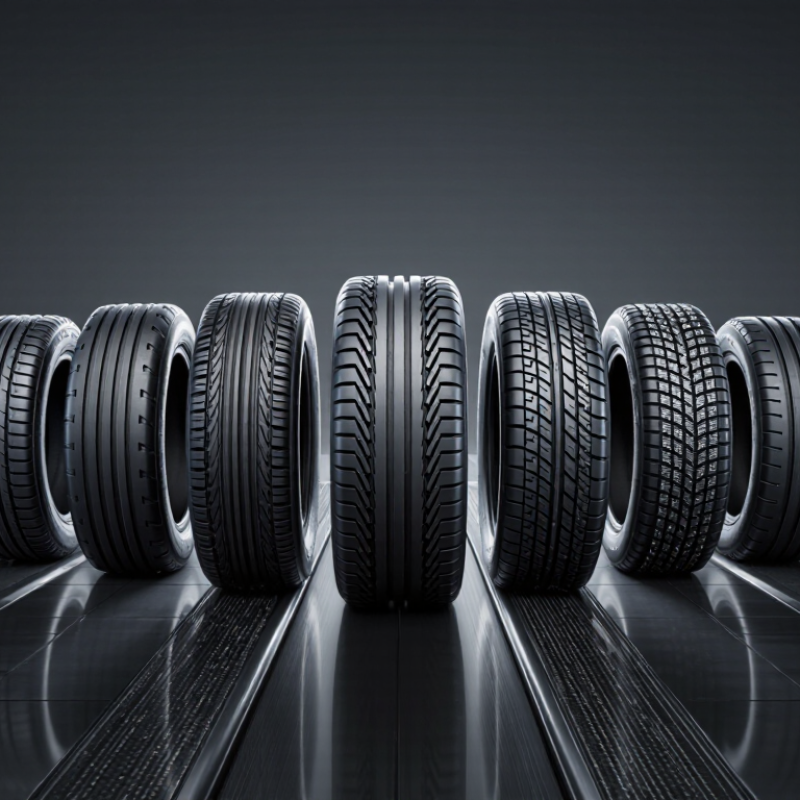
How Are Performance Tires Classified by UHP Speed Ratings and Tire Standards?
Performance tires are often described as ultra-high-performance, or UHP, but UHP is not one universal regulatory category. In practice, retailers and manufacturers commonly use it for tires with higher speed ratings, sporty handling, and low-profile designs.
The sidewall’s speed symbol gives a measurable reference: UNECE Regulation No. 30 lists H for 210 km/h, V for 240 km/h, W for 270 km/h, and Y for 300 km/h under specified test conditions. Some tires marked (Y) are rated above 300 km/h.
That distinction matters.
A speed symbol is not a safe-driving target. The rating assumes correct tire pressure, specified load, and controlled test conditions; heat, wear, road damage, and vehicle setup can change real-world performance.
The 2024 ETRTO Standards Manual also treats tire dimensions, load capacity, and rim fitment as linked specifications, not optional details. Check the complete size and load index, not just the final letter on the sidewall. A V-rated tire, for example, does not automatically suit every vehicle or load.
Labels can mislead. UHP classifications also vary across markets, so compare the published technical specification with the vehicle maker’s requirements.
China Produced 987.75 Million Tires in 2023, According to the NBS
China produced 987.75 million tires in 2023, according to the National Bureau of Statistics (NBS). That figure highlights the scale of the country’s tire industry. It provides useful context for questions about performance-tire manufacturing, but it does not reveal how many tires were built for high grip or precise handling. Big number. Different measure.
For buyers, production volume is only one part of the picture. Performance depends on design, materials, quality control, and how a tire behaves on the intended vehicle and road. A high-output industry may have broad manufacturing capacity, but that alone cannot establish product quality or rank individual manufacturers. The NBS figure does not provide those comparisons. That distinction is easy to overlook.
Tips: Compare tires in the same size and category. Check load and speed ratings, intended use, and independent test results where available. Ask how the tire performs in wet conditions, too; a quick, dry-road impression is not the whole story. Testing conditions matter.
Which 10 Chinese Manufacturers Lead the Performance-Tire Market?
China’s performance-tire market is led by manufacturers with proven engineering, consistent production, and products tested across varied road conditions. A credible top-ten shortlist should compare these capabilities, rather than rely on sales claims alone. Public test results and clear technical data matter.
The leading group includes companies developing ultra-high-performance tires, track-focused designs, and premium touring options. Their engineers tune tread patterns, rubber compounds, and sidewall stiffness to balance grip with predictable handling. Some also invest in wet-braking tests and heat management. Small differences matter: a tire that feels sharp on a dry test loop may behave differently on standing water.
For buyers comparing ten Chinese manufacturers, useful evidence includes independent test coverage, export experience, quality-control records, and product availability in the intended size. Check the exact model, not just the manufacturer’s reputation. Performance can vary within one product range. Rankings also shift as new tires enter the market, and public data is uneven. That makes a precise order difficult to defend; some uncertainty remains.
Performance Tire Speed-Rating Benchmarks in China
Standardized tire speed symbols indicate the maximum speed for which a tire is rated under specified conditions.
H, V, W, and Y correspond to maximum rated speeds of 210, 240, 270, and 300 km/h, respectively. These are standardized speed-rating values, not manufacturer rankings or brand test results.
How Do Their UHP Tires Compare by Size, Speed Rating, and EU Label Grade?
Comparing China’s leading performance-tire manufacturers is useful only when their UHP tires are matched by size and specification. A 225/45 R17 and a 245/40 R19 may differ in tread design, load index, and available speed rating. Compare identical fitments, not just model names. The speed symbol indicates a tire’s rated maximum speed under specified conditions; it does not guarantee stronger grip. Match it to the vehicle placard and intended use. Details matter.
The EU label grades rolling resistance and wet grip from A to E, while external noise is shown by class and decibel level. A strong wet-grip grade is useful, but it says little about dry cornering, wear, or ride comfort. Small caveat. Check the label for the exact size and version, since grades can vary within a tire range. For a fair ten-manufacturer comparison, record size, load and speed indices, label values, and test conditions in one table. I’d still want repeat tests; a tidy table can hide differences in temperature, road surface, or vehicle setup.
How Should Drivers Match Tire Specifications to Road and Track Use?
For public roads, start with the vehicle’s approved tire size, load index, and speed rating; these are safety limits, not styling choices. Then consider wet grip, tread life, and temperature suitability for your usual routes. NHTSA’s Uniform Tire Quality Grading system rates treadwear, traction, and temperature, but its treadwear grade is a comparative test result, not a mileage promise. Check pressures when tires are cold, and inspect the inner shoulders, where uneven wear can hide. Small details matter. The U.S. Department of Energy estimates that each 1 psi drop in all four tires can reduce fuel economy by about 0.2%. Yet pressure alone cannot compensate for the wrong tire specification.
Track use changes the priorities. Confirm the tire’s speed and load ratings, then follow its stated pressure and temperature limits. Record cold pressure before a session and hot pressure immediately afterward; also inspect tread edges for tearing or overheating. A road-focused tire may feel predictable on a commute but soften during repeated hard laps. Track data is useful, but one session is not a universal test: vehicle weight, alignment, surface, and weather all affect results. I have seen drivers focus on lap times and overlook wear patterns. That’s an easy mistake, and worth correcting before the next session.