Tire ratings can look like a row of small codes on a sidewall, but each one answers a practical question. How much weight can the tire carry? How fast is it designed to travel? How does it perform in standardized tests? These details matter when comparing tires, yet no single rating tells the whole story.
Consumer Reports tire expert Ryan Pszczolkowski has put the tire’s role simply: “Your tires are the only thing between your car and the road.” A useful reminder. The U.S. National Highway Traffic Safety Administration’s Traffic Safety Facts report counted 738 fatalities in tire-related crashes in 2017. That figure does not show that ratings alone prevent crashes. It does show why tire condition and informed selection deserve attention.
This guide explains common tire ratings, including load index, speed rating, and the U.S. Uniform Tire Quality Grading system. UTQG grades cover treadwear, traction, and temperature resistance. They help compare certain performance characteristics, but they are not a promise of exact mileage or a universal ranking across brands. A high treadwear number can seem reassuring. Still, one number can mislead. The right choice also depends on your vehicle, driving conditions, and the specifications listed by its manufacturer. Check the sidewall, then check the vehicle manual. Those small details matter.
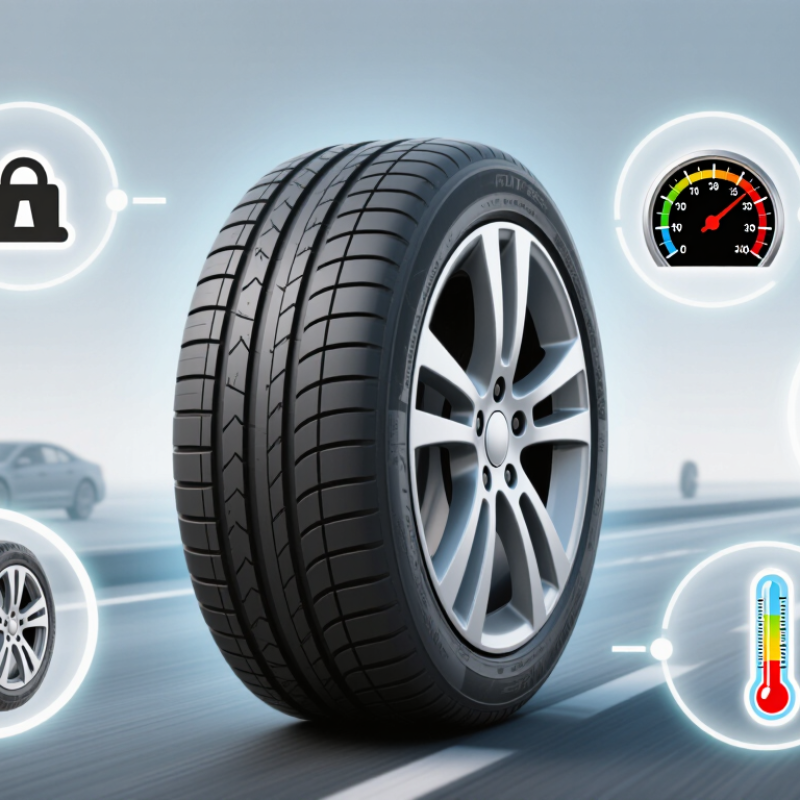
A tire sidewall can look like a string of numbers and letters. Take 205/55 R16 91V. The first number, 205, is the tire’s width in millimeters. The 55 is its aspect ratio: the sidewall height is 55 percent of the width. R indicates radial construction, while 16 is the wheel diameter in inches. Small print, big clues.
The final code describes load and speed. Load index 91 corresponds to a maximum of 615 kilograms per tire under specified conditions. The V symbol indicates a tested speed category of up to 240 km/h; it is not a safe-speed recommendation. Actual performance depends on tire condition, pressure, vehicle load, and other factors. A worn tire may not behave like a new one. Check the vehicle’s manual or door-jamb placard before replacing tires, and don’t assume a higher number always suits your vehicle.
Tips: Read the full sidewall code, then compare it with your vehicle’s requirements. Check inflation when the tires are cold, using the pressure listed by the vehicle maker—not the maximum molded on the tire. If the code is unclear, ask a qualified tire professional. I sometimes find the tiny lettering awkward to read, especially in poor light; a phone photo can help, but verify the characters before ordering.

A tire’s load index is a number that indicates how much weight one tire can carry under specified conditions. A 91 rating corresponds to a maximum load of 615 kg per tire. That is a per-tire figure, not the safe carrying capacity of the whole vehicle. The number looks simple. It isn’t.
The rating assumes the tire is inflated to the pressure specified for its rated load. Lower pressure can reduce carrying capacity and increase heat, especially on a long drive with a full cabin and a packed boot. Check the vehicle’s tire-pressure placard or owner’s manual; the sidewall’s maximum pressure is not automatically the correct everyday setting. I find this detail easy to overlook.
Four tires rated 91 add up to 2,460 kg on paper, but that does not mean any vehicle can safely carry that amount. Weight is rarely shared perfectly evenly, and passengers, luggage, and towing can change the load on each wheel. The required tire rating should meet the vehicle maker’s specification. Load index also differs from speed rating, which indicates a tire’s approved speed capability. Check both before choosing a replacement, and don’t guess from appearance.
Interpreting Load Index Capacity: A 91 Rating Equals 615 kg per Tire
How to read this chart: The load index is a standardized rating for a tire’s maximum load capacity. A load index of 91 corresponds to 615 kg per tire. Always follow the vehicle manufacturer’s specifications and use the prescribed tire pressure.
A tire’s speed rating is a letter on its sidewall that indicates the maximum speed it can sustain under specified test conditions and load. You may find the letter near the tire size code, such as “205/55 R16 V.” It is not a recommended driving speed. That distinction matters.
A higher rating generally reflects a tire’s ability to manage heat and stress at higher speeds, but it does not make every journey safer or faster. Correct inflation, vehicle load, tread wear, road surface, and temperature all affect performance. A worn or underinflated tire cannot be treated as though its original rating guarantees its capability. The code looks simple, but it is easy to overread.
When replacing tires, check the vehicle’s manual or placard for the required rating, and follow the vehicle maker’s guidance. Do not choose a lower-rated tire just because you rarely drive quickly; the rating may relate to the vehicle’s design and handling. S and V are useful reference points, not promises for every real-world condition. A quick sidewall check helps, but it is only one part of choosing a suitable tire.
What Are Tire Ratings and What Do They Mean?
A UTQG label is a comparison tool, not a promise of tire life. For treadwear, 100 is the reference grade: a tire rated 200 showed twice the wear resistance of the reference tire in the prescribed test. It does not mean 200,000 miles—or even twice the real-world mileage. NHTSA explains that treadwear grades are based on controlled-course comparisons, while road surface, inflation, load, and driving habits affect wear. A sharp curb or underinflated tire can matter more than the number on the sidewall. Treadwear is only one clue.
Traction grades run from AA to C. They measure straight-line wet braking on specified asphalt and concrete surfaces; they do not rate cornering grip or resistance to hydroplaning. Temperature grades range from A to C and describe a tire’s ability to dissipate heat under controlled high-speed testing. Under the U.S. UTQG standard, A corresponds to performance above 115 mph, B to 100–115 mph, and C to 85–100 mph; C is the minimum grade. These figures come from NHTSA’s UTQG guidance and the federal test criteria in 49 CFR § 575.104. Useful, but imperfect: a high grade cannot replace checking pressure, tread depth, and the conditions you actually drive in.
Replacement tires should match the vehicle placard, usually found on the driver’s door jamb, and the owner’s manual. Check the listed tire size, load index, and speed rating before comparing options. These markings describe fit and performance limits, not just marketing categories. Small details matter. A tire that looks close can still have a lower load capacity.
Match the original size unless the vehicle manufacturer lists an approved alternative. The replacement’s load index should meet or exceed the stated requirement, and its speed rating should meet the vehicle specification. If the placard lists several sizes, use the ratings associated with your chosen size. Do not treat the maximum pressure on the tire sidewall as the normal inflation target. Set pressure when tires are cold, using the placard value.
Check the placard, then verify the full sidewall code and ask a qualified installer to confirm fit and load suitability. It takes a minute. It is tempting to compare tread patterns first, but that is not the most useful first check. Different wheels, heavy cargo, or towing may affect what is appropriate. If the placard and another source seem to conflict, pause and consult the manual or a tire professional rather than guessing.
Reignite your passion for driving with Yokohama tires and experience the superior performance you deserve.