Choosing the best car tires from China requires more than comparing prices or reading a tread pattern. China has a large tire industry, with manufacturers such as Sailun, Giti, Linglong, and Triangle serving different market segments. Their products can range from practical commuter tires to performance-focused models. Quality is not identical across brands.
David Shaw, an independent tire industry analyst, has said, “The best tire is the one that matches the vehicle, road, and driver—not simply the lowest-priced option.” This principle matters when evaluating Chinese car tires. A family sedan used on wet city roads needs dependable braking and stable cornering. A highway driver may value low noise, strong casing construction, and long tread life. Check independent test results, wet-grip ratings, speed ratings, load indexes, and warranty support. Look closely at the sidewall markings. Small details matter.
Some buyers still assume Chinese tires are automatically inferior. That view is too simple. However, not every affordable tire offers the same performance. Certification marks alone do not guarantee an excellent driving experience. Real-world testing remains important. I would also inspect the production date, dealer reputation, and replacement availability before purchasing. My own conclusion is not perfect: laboratory ratings cannot fully predict every road, temperature, or driving habit. Still, careful comparison can reveal strong value. The best car tires from China are those that combine verified safety, suitable specifications, consistent manufacturing, and honest after-sales support. Price matters. It should not lead the decision.
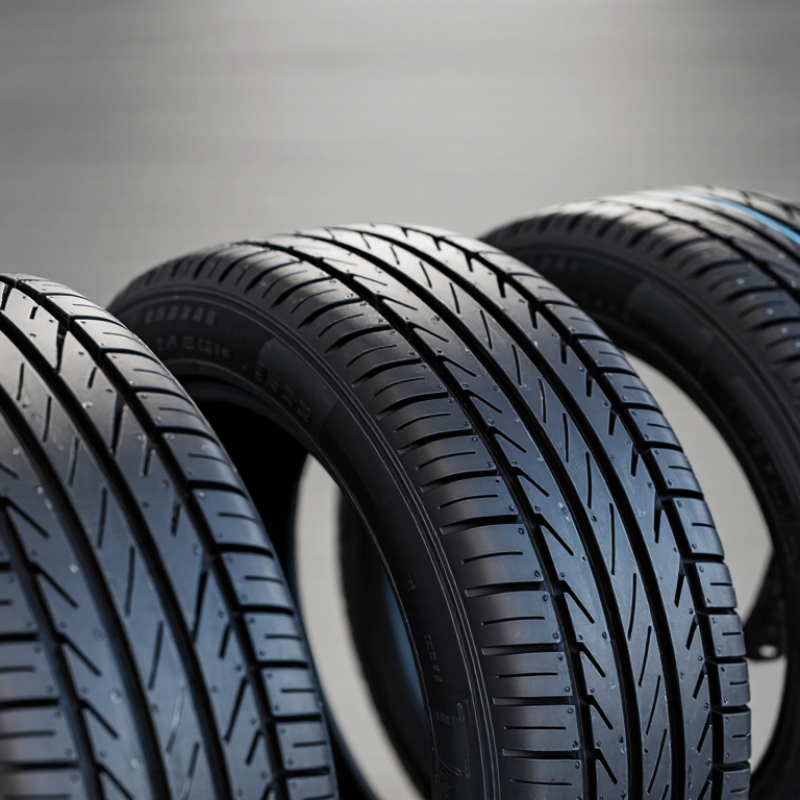
A high-quality car tire from China is defined by performance, not its country of origin. In practical inspections, I look at the casing, tread compound, bead construction, and production consistency. These details affect steering response, braking, comfort, and service life.
Reliable tires carry clear size, load, speed, and manufacturing information. Their test records should cover wet braking, heat resistance, endurance, and high-speed stability. Independent certification also matters, but paperwork alone cannot replace real testing. A tire may meet a standard and still feel noisy or less confident on rough roads. That difference is important.
Wet grip deserves close attention. Look for stable braking on soaked asphalt, not only attractive tread patterns. Even wear is another useful sign. Uneven wear can reveal weak construction, poor alignment, or an unsuitable vehicle match. Quality control should include uniformity checks, X-ray inspection, and traceable batch records.
Small details matter. A fresh production date helps. Proper storage matters too.
I would also compare the tire with the vehicle’s original specifications. A cheaper option may reduce comfort or mileage over time. This is where judgment becomes imperfect; laboratory results cannot predict every road, climate, or driving habit. The best choice balances verified testing, practical feedback, correct fitment, and dependable after-sales support.
| Evaluation Dimension | Recommended Benchmark or Data Point | Why It Indicates Quality | How to Verify It |
|---|---|---|---|
| Regulatory Certification | Applicable approval for the destination market, such as UNECE type approval for markets requiring it, or CCC certification for products sold in mainland China. | Certification confirms that the tire has been assessed against defined safety, construction, marking, or performance requirements. | Check the molded sidewall markings and request the relevant certificate from the seller or manufacturer. |
| Correct Tire Size | Exact match with the vehicle manufacturer’s recommended size, load index, and speed rating. | A correctly matched tire supports safe handling, braking, steering response, and vehicle load capacity. | Compare the tire marking with the vehicle door-jamb label, owner’s manual, or approved fitment specification. |
| Load Index | Load index should be equal to or higher than the vehicle manufacturer’s specification, unless an approved fitment states otherwise. | The load index represents the maximum load capacity of one tire under specified conditions. | Read the number after the tire size, such as the “91” in 205/55 R16 91V, and compare it with the vehicle requirement. |
| Speed Rating | Speed rating should meet or exceed the vehicle manufacturer’s specified rating. | The rating indicates the maximum permitted speed capability under controlled conditions when the tire is correctly inflated and loaded. | Read the final letter in the service description; for example, “V” is a standardized speed-rating symbol. |
| Wet-Grip Performance | For markets using the EU tire label, prefer a wet-grip class near the top of the A–E scale. | Wet-grip classification is related to braking performance on wet roads. A higher class generally represents shorter wet braking performance under the label test method. | Check the official tire label and compare tires tested under the same labeling system. |
| Rolling Resistance | For markets using the EU tire label, compare the A–E rolling-resistance scale while also considering wet grip and mileage. | Lower rolling resistance can help reduce energy use, but it should not be judged separately from braking, handling, comfort, and durability. | Review the tire label and independent test results rather than relying only on advertising claims. |
| External Rolling Noise | Compare the label value in decibels (dB); a lower value generally indicates less externally measured road noise. | Noise performance can affect driving comfort and environmental noise, although cabin noise also depends on the vehicle and road surface. | Check the labeled dB value and the accompanying noise classification where applicable. |
| Tread Design | Balanced combination of circumferential grooves, lateral channels, stable tread blocks, and wear indicators. | Grooves help evacuate water, while stable tread blocks support braking, cornering, and steering precision. | Inspect the pattern for consistent molding, clean grooves, uniform ribs, and no visible distortion or blocked channels. |
| New-Tire Tread Depth | Many passenger-car tires are commonly supplied with approximately 7–9 mm of tread depth, but the exact value varies by size and design. | Greater initial tread depth can provide more wear allowance, but tread depth alone does not prove overall tire quality. | Measure several points across the tread with a tread-depth gauge and compare the result with the product specification. |
| Uniformity and Balance | Low radial force variation, consistent roundness, and minimal imbalance after mounting. | Good uniformity helps reduce vibration, uneven wear, steering shake, and premature suspension stress. | Request factory uniformity records where available and check the mounted tire on a calibrated balancing machine. |
| Carcass and Sidewall Construction | Consistent sidewall stiffness, clean bead construction, and no bulges, cracks, exposed cords, or molding defects. | The carcass and bead transfer braking, cornering, and inflation forces between the vehicle and road. | Perform a visual inspection and confirm that the tire’s construction type matches the intended vehicle application. |
| Compound Consistency | Uniform rubber appearance and consistent hardness across comparable tires in the same production batch. | Consistent compound formulation supports predictable grip, wear, temperature resistance, and wet-road behavior. | Use supplier quality records, batch traceability, and independent laboratory testing when purchasing at scale. |
| Age and Storage History | Prefer unused tires with a recent production date and documented storage away from heat, sunlight, moisture, and ozone sources. | Rubber gradually ages even when a tire is not in use. Poor storage can accelerate cracking and material degradation. | Read the four-digit date code: the first two digits indicate the production week and the last two indicate the production year. |
| Wear Indicators | Clearly molded tread-wear indicators positioned within the main grooves. | Indicators provide a visual reference for the legal or recommended minimum tread level applicable in the market. | Confirm that the indicators are present, evenly molded, and easy to identify in the main grooves. |
| High-Speed and Endurance Testing | Documented test results for endurance, high-speed capability, braking, handling, and temperature resistance. | Controlled testing provides stronger evidence than appearance, price, or marketing language alone. | Ask for dated test reports showing the test method, sample size, laboratory details, and pass criteria. |
| Wet and Dry Braking | Short and consistent stopping distances in independent tests, with results compared using the same vehicle, road, temperature, and tire size. | Braking is a direct safety performance measure and can reveal differences in tread compound and construction. | Use independent comparative tests and avoid comparing results from different test conditions. |
| Ride Comfort and Handling | Stable straight-line tracking, predictable cornering, controlled impact absorption, and low vibration. | A high-quality tire should provide a balanced driving response rather than optimizing only one performance characteristic. | Evaluate through standardized road tests and driver feedback after confirming correct inflation and wheel alignment. |
| Warranty and Traceability | Written warranty, batch identification, production records, and a clear process for handling defects or claims. | Traceability supports product accountability and makes it easier to investigate manufacturing or distribution problems. | Confirm the warranty period, coverage exclusions, claim procedure, and the tire’s batch or serial markings. |
| Overall Quality Profile | Best choice: balanced performance across safety, durability, comfort, efficiency, certification, and after-sales support. | The best tire is not necessarily the cheapest or the one with the highest single rating; it should suit the vehicle, climate, roads, load, and driving conditions. | Combine certification checks, independent test evidence, production-date verification, physical inspection, and total ownership cost. |